
What Is the “Becoming Chinese” TikTok Trend? (And the Mandarin Vocab Behind It)
If your TikTok For You Page has been full of people swapping their iced lattes for thermos flasks, making congee for breakfast, and solemnly announcing they are now “in a very Chinese time” of their lives — welcome to Chinamaxxing, 2026’s most unexpected viral trend.
For the GoEast community, this trend is more than just entertaining. Almost every habit going viral under the #BecomingChinese hashtag has real Mandarin vocabulary, cultural depth, and centuries of philosophy behind it. This post breaks down the trend itself, shows you the actual viral videos, and then turns the whole thing into a proper Chinese language lesson.
Let’s start at the beginning.
What Is the “Becoming Chinese” / Chinamaxxing Trend?
Chinamaxxing (also written as #BecomingChinese or #ChineseBaddie) is a viral social media movement that began circulating in late 2025 and exploded globally in early 2026. At its core, it involves non-Chinese people — mostly Gen Z in the US and Europe — playfully adopting everyday Chinese lifestyle habits and declaring themselves to be, culturally at least, “becoming Chinese.”
The phrase itself is a riff on the closing line of the 1999 film Fight Club (“You met me at a very strange time in my life”), which was remixed online as “You met me at a very Chinese time in my life.” From there, it evolved into a full movement.
The habits going viral include:
- Carrying a thermos of plain hot water everywhere
- Wearing house slippers indoors at all times
- Replacing salads with warm soups and congee
- Boiling apples with goji berries and red dates
- Practicing Tai Chi or Baduanjin qigong in the morning
- Going to bed before midnight (“early is Chinese”)
- Trying gua sha, cupping, and acupuncture
By February 2026, videos under these hashtags had accumulated over 20 million views, with thousands of creators posting their own “Chinese era” transformations.
The Viral Videos That Started It All
🎬 Sherry Zhu (@sherryxiiruii) — The Original “Chosen One” Video
The trend’s breakout moment came from Sherry Zhu, a 23-year-old Chinese-American creator from New Jersey. In her now-iconic video, she looks directly at the camera and says:
“I’m gonna let you in on a little secret, OK? Tomorrow you are turning Chinese. And I know that sounds intimidating, but there is no point in fighting it now. Because you are the chosen one.”
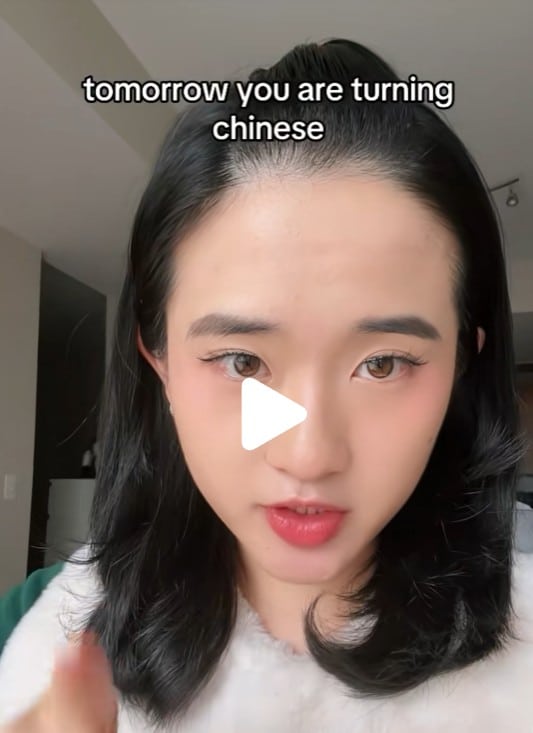
The video hit 2.7 million views. Sherry’s dry humour and genuine cultural warmth struck a chord — she wasn’t mocking anyone, she was inducting them. Her follow-up videos covered topics like how Chinese people calculate the coldest period of the year (三九 sān jiǔ), how to make the perfect congee, and why drinking cold water is considered bad for digestion in Chinese medicine.
👉 Watch Sherry’s videos on TikTok @sherryxiiruii
🎬 The “Hot Water Convert” Trend
One of the most-shared sub-trends featured non-Chinese creators documenting their switch from iced coffee to hot water — and genuinely loving it. TikToker @iitu.h posted a video captioned “thank you miss Sherry for letting me know (I miss ice cold water)” with the hashtag #hotwater #tcm, racking up hundreds of thousands of views. The comment sections were flooded with Chinese users welcoming newcomers to the culture.
🎬 The Adidas “Chinese Three-Piece” Moment
On the fashion side, a TikTok video titled “POV: your dad just came back from China” showed a man handing out Adidas “Chinese New Year” Tang jackets (唐装 táng zhuāng) to his whole family. It hit 9.5 million views and sold out the jacket across most of China almost overnight.
👉 Browse #BecomingChinese on TikTok
🎬 IShowSpeed in China (The Catalyst)
Many credit American megainfluencer IShowSpeed‘s viral trip to China in March 2025 as a major spark. His genuine reactions to high-speed trains, street food, and Chinese tech fuelled a huge wave of western curiosity about China. If you haven’t seen his China content, it’s worth a watch for pure entertainment alone.
Why Is This Happening? The Cultural Context
The trend isn’t accidental. Researchers and commentators point to several converging forces:
1. Burnout culture backlash. Western “hustle culture” and hyper-optimised self-care have started to feel exhausting and hollow. Chinese practices rooted in balance, moderation, and long-term wellbeing feel like a genuine alternative.
2. China’s growing soft power. From Labubu figurines and Mixue Ice Cream & Tea to short dramas and Xiaohongshu, Chinese cultural exports have been quietly accumulating global fans for years. The Chinamaxxing trend is in many ways the internet making that visible all at once.
3. The RedNote (小红书 Xiǎohóngshū) migration. When the US TikTok ban loomed in early 2025, millions of Americans moved to Xiaohongshu and had direct, warm interactions with Chinese users for the first time. That cultural exchange never really ended.
4. Travel content. A wave of vlog content showing foreigners visiting China and being surprised by its modernity, safety, food scene, and hospitality has reshaped perceptions dramatically.
As the New York Times put it, the meme is “more of an absurdist joke, a wellness goal or a subtle, ironic expression of protest. Or all of the above.”
Now the Good Bit: The Chinamaxxing Vocabulary Guide
If you’re learning Mandarin, this trend is a goldmine. Every single habit going viral has a Chinese name, a cultural concept behind it, and often a whole branch of philosophy attached. Here’s your vocabulary guide to the Chinamaxxing lifestyle.
The One Word That Explains Everything: 养生 (yǎng shēng)
Before anything else, learn this word. It is the philosophical umbrella over the entire trend.
| Chinese | Pinyin | Meaning |
|---|---|---|
| 养生 | yǎng shēng | “Nourishing life” — the practice of preventive wellness and living in harmony with nature |
养生 is not a diet or a workout plan. It’s a whole philosophy: eat warm foods, rest when you’re tired, align your habits with the seasons, and prevent illness before it starts. Almost every Chinamaxxing habit — the hot water, the congee, the early bedtime — is an expression of 养生.
You’ll hear Chinese people say: 你要注意养生 (Nǐ yào zhùyì yǎng shēng) — “You should take care of your wellbeing.” It’s something older relatives say constantly.
The Trending Habits — With Their Chinese Names
| The Trend | Chinese | Pinyin | Literally Means |
|---|---|---|---|
| Drinking hot water | 热水 | rè shuǐ | “Hot water” — a daily non-negotiable in Chinese wellness |
| House slippers | 拖鞋 | tuō xié | “Drag shoes” — worn at home to keep feet warm |
| Congee / rice porridge | 粥 | zhōu | Porridge — the ultimate gentle, nourishing food |
| Hotpot | 火锅 | huǒ guō | “Fire pot” — the communal meal everyone on TikTok is obsessed with |
| Red dates | 红枣 | hóng zǎo | “Red dates” — boiled into tea or porridge for energy and blood health |
| Goji berries | 枸杞 | gǒu qǐ | A TCM superfood — the viral “boiled apple hack” uses these |
| Soup / broth | 汤 | tāng | “Soup” — in Chinese culture, soup is medicine |
| Tai Chi | 太极拳 | tài jí quán | “Supreme ultimate fist” — slow martial art / moving meditation |
| Baduanjin qigong | 八段锦 | bā duàn jǐn | “Eight pieces of brocade” — the specific qigong routine going viral on TikTok |
| Gua sha (face scraping) | 刮痧 | guā shā | “Scrape sand/rash” — a TCM technique for improving circulation |
| Cupping therapy | 拔罐 | bá guàn | “Pull jar/cup” — suction cups applied to the skin to release tension |
| Acupuncture | 针灸 | zhēn jiǔ | “Needle moxibustion” — the ancient needle therapy |
| Tang jacket (the viral Adidas style) | 唐装 | táng zhuāng | “Tang dynasty clothing” — a traditional jacket style with frog buttons (盘扣 pán kòu) |
Traditional Chinese Medicine (TCM) Core Vocabulary
Many of the Chinamaxxing habits are rooted in 中医 (Zhōng yī) — Traditional Chinese Medicine. Here are the key concepts that explain why these habits exist:
| Chinese | Pinyin | What It Means for Learners |
|---|---|---|
| 中医 | Zhōng yī | Traditional Chinese Medicine — the whole system |
| 气 | qì | Vital energy / life force — you’ll hear this everywhere in Chinese health talk |
| 阴阳 | yīn yáng | Yin and Yang — the balance of opposing forces; cold water disrupts yin-yang balance, hot water restores it |
| 寒 | hán | “Cold/cold energy” — cold drinks introduce 寒 into the body, weakening the spleen |
| 暖胃 | nuǎn wèi | “Warm the stomach” — the reason hot water and warm soups are prioritised |
| 补气 | bǔ qì | “Replenish qi” — what red dates and goji berries are said to do |
| 防病于未然 | fáng bìng yú wèi rán | “Prevent illness before it happens” — the TCM principle of preemptive care (the whole point of 养生) |
Key Phrases: How to Talk About This Trend in Chinese
Now let’s make it conversational. Here’s how to actually use these concepts in Mandarin — useful for talking about the trend with your Chinese friends, teachers, or language partners.
| Chinese | Pinyin | English |
|---|---|---|
| 我越来越中国了。 | Wǒ yuè lái yuè Zhōngguó le. | I’m becoming more and more Chinese. |
| 你太中国了! | Nǐ tài Zhōngguó le! | You’re so Chinese! (a compliment in this context) |
| 我现在很注意养生。 | Wǒ xiànzài hěn zhùyì yǎng shēng. | I’m really paying attention to my wellness now. |
| 喝热水对身体好。 | Hē rè shuǐ duì shēntǐ hǎo. | Drinking hot water is good for the body. |
| 我每天早上喝一杯热水。 | Wǒ měitiān zǎoshang hē yī bēi rè shuǐ. | Every morning I drink a cup of hot water. |
| 冷饮对脾胃不好。 | Lěng yǐn duì pí wèi bù hǎo. | Cold drinks are bad for the spleen and stomach. |
| 我在学做中国菜。 | Wǒ zài xué zuò Zhōngguó cài. | I’m learning to cook Chinese food. |
| 这个趋势让我对中国文化更感兴趣了。 | Zhège qūshì ràng wǒ duì Zhōngguó wénhuà gèng gǎn xìngqù le. | This trend has made me even more interested in Chinese culture. |
Bonus: The “Chinese Baddie” Food Vocabulary
One of the most viral specific habits was the boiled apple hack — simmering apples with goji berries and red dates as a gut-health drink. Here’s the vocabulary to follow a recipe like this in Chinese:
- 苹果 (píngguǒ) — apple
- 枸杞 (gǒu qǐ) — goji berries
- 红枣 (hóng zǎo) — red dates
- 煮 (zhǔ) — to boil/simmer
- 加水 (jiā shuǐ) — add water
- 小火 (xiǎo huǒ) — low heat
- 对肠胃好 (duì cháng wèi hǎo) — good for the gut
If you want to try it: 把苹果、枸杞和红枣放入锅中,加水,小火煮20分钟。(Bǎ píngguǒ, gǒu qǐ hé hóng zǎo fàng rù guō zhōng, jiā shuǐ, xiǎo huǒ zhǔ 20 fēnzhōng.) — “Put apples, goji berries, and red dates into a pot, add water, and simmer on low heat for 20 minutes.”
What Chinamaxxing Actually Gets Right (And What You’re Missing)
Here’s something worth noting for anyone learning Mandarin: the habits going viral are genuinely practised in China. This isn’t a Western projection onto Chinese culture — it’s real.
When you visit a Chinese household, you will almost certainly be offered a cup of hot water. You will almost certainly see a pair of 拖鞋 (tuō xié) at the door for you to change into. If you’re sick, someone will make you 粥 (zhōu). If it’s winter, dinner will likely involve 火锅 (huǒ guō) or a slow-cooked 汤 (tāng).
The gap between the trend and the real cultural depth is where language learning comes in. Knowing that 养生 exists as a concept — that there is a word for the philosophy of living preventively and in harmony with nature — is completely different from just copying the surface habits.
That’s the thing about learning Chinese: you don’t just get vocabulary. You get access to a way of thinking about the world that has been refined over thousands of years. The language is the portal.
Ready to Go Deeper Than the Trend?
If the Chinamaxxing trend has sparked genuine curiosity about Chinese culture, language, or life in China — that’s exactly the kind of motivation that leads to real language progress. The best time to start learning is when you actually want to.
At GoEast Mandarin, we teach Mandarin the way it’s actually used — including all the cultural context that makes the language click. Whether you’re a complete beginner who just discovered 养生, or an intermediate learner who wants to hold a real conversation about Chinese culture, we have a class for you.
👉 Book a free trial class with GoEast Mandarin →
Or if you’re working on your vocabulary first, grab our free HSK vocabulary lists:
📥 Download your free HSK vocabulary list →
Quick Recap: Your Chinamaxxing Vocabulary Cheat Sheet
- 养生 yǎng shēng — the art of nourishing life (wellness philosophy)
- 中医 Zhōng yī — Traditional Chinese Medicine
- 热水 rè shuǐ — hot water
- 粥 zhōu — congee / rice porridge
- 火锅 huǒ guō — hotpot
- 拖鞋 tuō xié — house slippers
- 红枣 hóng zǎo — red dates
- 枸杞 gǒu qǐ — goji berries
- 太极拳 tài jí quán — Tai Chi
- 八段锦 bā duàn jǐn — Baduanjin qigong
- 刮痧 guā shā — gua sha
- 拔罐 bá guàn — cupping
- 气 qì — vital energy / qi
- 阴阳 yīn yáng — Yin and Yang
- 唐装 táng zhuāng — Tang-style jacket
Save this list. Screenshot it. Send it to the friend who just bought a thermos and declared themselves Chinese. They’ll need it.