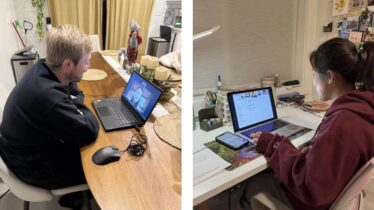

A Singapore Family’s Oral Chinese Breakthrough: Building Real Speaking Confidence in an English-First Home
Dr. Jimmy Lim, an ophthalmologist in Singapore, wanted more than textbook Chinese for his two children—Elijah (11) and Naomi (9).
With consistent 1-on-1 online lessons at GoEast and targeted training on tones, structure, and oral exam performance, both children made visible progress:
Elijah’s school oral results rose sharply, and Naomi advanced from level 4 to level 5—despite a demanding ballet schedule.
When “Knowing Chinese” still isn’t “speaking Chinese”
In Singapore, Chinese is a required school subject. Many children can recognize words and complete exercises—yet still struggle in the moment that matters most:
when they need to speak.
For the Lim family, that gap became impossible to ignore. Elijah, 11, was finding oral Chinese especially hard—both for daily classroom performance and for school progression requirements.
His younger sister Naomi, 9, faced the same challenge: building oral expression, not just “learning content.”
At home, the environment didn’t naturally solve the problem. Only Dad speaks Chinese; Mom doesn’t. The family’s daily language is mainly English,
and most of the children’s social and school life runs in English too.
So the question became practical: How do you build speaking ability—without relying on a Mandarin environment you don’t have?
A parent who thinks like a professional
Dr. Jimmy Lim is an ophthalmologist. In his work, precision matters. Progress is measured, tracked, and reviewed.
And “practice” only counts if it transfers to real performance.
He applied the same logic to language learning. Instead of looking for more worksheets, he looked for a system that could reliably improve what the school oral exam actually tests:
|
Jimmy found GoEast on Instagram, booked a trial, and decided quickly—not because of marketing claims, but because the lesson format matched what he believed the kids needed:
consistent speaking time, structured feedback, and targeted skill-building.
In January 2025, Elijah and Naomi started 1-on-1 online lessons with GoEast.
What changed in lessons: tones, structure, speed
Both children studied with the same GoEast teacher—Fiona (李佳). For the Lim family, that mattered more than it sounds:
one teacher meant stable routines, fewer coordination costs, and a teacher who truly understood the household context and each child’s personality.
Early on, Fiona identified the blockers holding Elijah back most:
|
Then the work became methodical. Rather than “correcting everything,” Fiona trained one layer at a time:
| word → phrase → sentence accuracy → speed short response → expanded response practice prompts → exam-style performance |
When tones kept flipping, Fiona didn’t treat it as a one-time mistake. She built dedicated tone practice into lessons and reinforced it continuously—until Elijah could produce tones without losing his train of thought.
This is where many children change: when they stop spending mental energy on “surviving pronunciation,” they can finally focus on meaning and expression.
The result that made the family double down
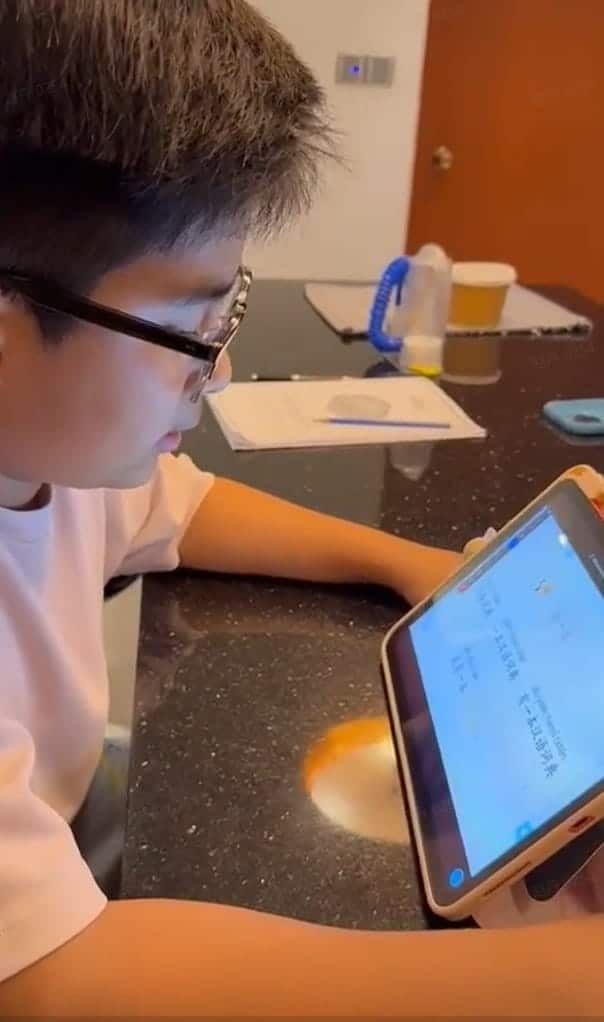
Elijah’s oral performance at school improved visibly. In a year, his oral results moved from a serious pain point to becoming a clear strength in progress—rising sharply into a solid score range.
The family noticed another signal that mattered even more: Elijah began participating more in class and expressing himself with less hesitation.
For the first 2–3 months, Elijah took one lesson per week. Once Jimmy saw engagement and improvement, he increased it to two lessons per week.
The difference was immediate: more retention, less “restarting every week,” and faster fluency growth.
As of today, Elijah has completed 72 lessons with Fiona—remarkably consistent for a busy household.
A father who stays close to the learning loop
Jimmy didn’t outsource everything and disappear. After school exams, he would check in with the GoEast language consultant and teacher:
what the school feedback said, what improved, what still felt difficult, and what he wanted to see next.
That parent-teacher loop kept learning aligned with reality. It also allowed lessons to be customized—especially when the family increased frequency after the summer and expected more visible progress.
Like many children, Elijah doesn’t always complete homework consistently. Instead of turning that into constant friction at home,
Jimmy focused on what he considered the highest-leverage input: regular speaking practice.
Naomi’s version of consistency: one class, no matter what
Naomi’s schedule is different. Ballet training and competitions take up significant time, so she maintains one lesson per week.
But she’s held onto one non-negotiable: she still shows up.
Over time, she advanced from level 4 to level 5, building oral expression steadily alongside her demanding routines.
The family’s wish is simple: if time allows, increasing to twice a week would likely accelerate progress—because they’ve already seen how frequency changes outcomes.

What this breakthrough really means
This isn’t a story about perfect Mandarin at home. The Lims don’t have that.
It’s a story about something many families recognize: Chinese exists in the curriculum, but spoken confidence doesn’t automatically appear—especially in English-first households.
For Jimmy, the breakthrough wasn’t a single score. It was the moment his children began building a repeatable skill:
|
In other words: oral Chinese that functions under real conditions. Once that engine starts, grades become a lagging indicator—not the goal.
From screen to Shanghai: when Mandarin became real
After months of online lessons, the Lim family traveled to Shanghai and visited GoEast in person.
For Elijah and Naomi, it was a small but powerful shift: the teacher they met weekly on a screen became a real mentor.

The “lesson” stopped feeling like a separate online activity and started to connect with real places, real faces, and real interactions.
In Shanghai, the skills they trained in class—tones, sentence structure, speaking speed, and responding under pressure—suddenly had a purpose outside exams.
They weren’t trying to sound perfect. They were trying to be understood.
For an English-first household, that’s the true breakthrough: when Mandarin stops living only in textbooks and becomes something your child can reach for in real life.