

How to Choose a Chinese Name as a Foreigner: 4 Methods + 17 Real Examples
Quick answerThere are four main ways foreigners choose a Chinese name: (1) match the sound of your original name, (2) pick characters with a good meaning, (3) build it around a real surname (your own or a partner’s), or (4) have a teacher, friend, or family member give you one. A good Chinese name is usually 2–3 characters, easy to pronounce, positive in meaning, and free of unintended slang. The best names often blend two of these methods — characters that sound like your name and carry a nice meaning.
Why foreigners get a Chinese name
The most common reason is practical: many Mandarin speakers find non-Chinese names hard to pronounce, so a Chinese name removes friction in daily life. But there are deeper reasons too. Choosing your own Hanzi is a satisfying way to immerse yourself in the language, and in many real-world situations — opening a bank account, getting a driver’s license, signing a contract — a Chinese name is genuinely useful to have on hand.
Beyond logistics, a Chinese name signals respect and effort. When you introduce yourself with a thoughtfully chosen name and can explain the characters behind it, native speakers notice — it’s a small but powerful way to build rapport. Over time you may even pick up an affectionate nickname: friends and colleagues often add 老 (lǎo, “old”) or 小 (xiǎo, “young”) before your surname. Being called 老李 (Lǎo Lǐ) isn’t about age — it signals trust and seniority, while 小王 (Xiǎo Wáng) is a warm, familiar way to address someone younger. Both are marks of belonging.
How a Chinese name is structured
Before choosing characters, understand the format. A Chinese name is written surname first, given name second, and almost always uses two or three characters total:
| Pattern | Example | How it reads |
|---|---|---|
| Surname (1) + Given name (1) | 朴翼 Pǔyì | 2 characters — clean and modern |
| Surname (1) + Given name (2) | 厉龙山 Lìlóngshān | 3 characters — the most common form |
| Surname (1) + Given name (2) | 马小飞 Mǎ Xiǎofēi | 3 characters — friendly and easy to say |
How to pick a surname
The surname is a single character drawn from real Chinese surnames. The simplest approach is to choose one that sounds similar to your own, or to pick a common, widely recognized surname. Avoid rare two-character surnames (like 欧阳 Ōuyáng or 诸葛 Zhūgě) and surnames with awkward associations.
| Your name / sound | Chinese surname | Pinyin |
|---|---|---|
| Lee | 李 | Lǐ |
| Bell | 贝 | Bèi |
| Garcia | 高 | Gāo |
| Mark / Matt / Ma- | 马 | Mǎ |
| (safe, common defaults) | 王 · 刘 · 林 | Wáng · Liú · Lín |
The 4 methods for choosing a Chinese name
Almost every Chinese name a foreigner adopts comes from one of four approaches:
| Method | Best for | Trade-off |
|---|---|---|
| 1. Phonetic — match the sound of your name | Staying recognizable; easy adoption by friends & family | Meaning may be weak if you only chase the sound |
| 2. Meaning-based — pick characters you love | A name that reflects who you are | Can sound less like your original name |
| 3. Surname-anchored — build around a real surname | Partners of Chinese spouses; long-term residents | Limits which characters fit naturally |
| 4. Gifted — a teacher, friend, or family names you | Beginners; an authentic, story-rich origin | You have less control over the result |
The strongest names usually combine two methods — most often a name that sounds like your original name and carries a positive meaning. You’ll see this pattern in the examples below.
Famous foreigners with Chinese names
Some of the best examples come from well-known foreigners who built careers, diplomacy, or fame in China. Their names show the same four methods in action — and notably, Western diplomats traditionally receive elegant three-character names that read like authentic Chinese names rather than transliterations.
| Person | Chinese name | Method |
|---|---|---|
| Mark Rowswell — Canadian performer, “most famous foreigner in China” | 大山 Dàshān | Meaning (“Big Mountain”) |
| Kevin Rudd — former Australian Prime Minister | 陆克文 Lù Kèwén | Elegant sound-match |
| Jon Huntsman — former U.S. Ambassador to China | 洪博培 Hóng Bópéi | Elegant sound-match |
| Chris Patten — last British Governor of Hong Kong | 彭定康 Péng Dìngkāng | Elegant sound-match |
| Jonathan Kos-Read — American actor in China | 曹操 Cáo Cāo | Bold historical name |
| Dominic Johnson-Hill — British entrepreneur in Beijing | 江森海 Jiāng Sēnhǎi | Fully localized |
Notice the spectrum: 大山 is a chosen persona with a strong meaning, the diplomats’ names are refined sound-matches that follow Chinese naming aesthetics, and 曹操 is a deliberately bold pick that borrows a famous historical figure. Each works because it sounds natural to a native ear.
Step-by-step: how to build your own Chinese name
- Start with sound or meaning. Decide whether you want your name to echo your original name’s sound, express a meaning, or both. This narrows the search instantly.
- Pick a surname. Choose a real Chinese surname — either one phonetically close to your own, or one connected to your partner or family.
- Choose 1–2 given-name characters. Look for characters that are easy to write, positive in meaning, and pleasant to say together. Avoid overly rare or complicated characters.
- Say it out loud. Test the tones and flow. A good name rolls off the tongue and doesn’t clash tonally.
- Check for hidden meanings. Run it past a native speaker to make sure it doesn’t sound like slang, a place, an object, or a celebrity.
- Get a second opinion. A teacher or native friend can catch issues you’ll never spot yourself — and often suggests a more elegant option.
Worked example. Say your name is James Bell.
① Surname that sounds like “Bell” → 贝 Bèi.
② Two given-name characters that nod to “James” and mean something good → 杰明 Jiémíng (“outstanding and bright”).
③ Result: 贝杰明 Bèi Jiémíng — sounds close to your real name, reads like an authentic Chinese name, and carries a positive meaning. (Always confirm with a native speaker before you commit.)
Common mistakes to avoid
- Directly transliterating your name. Turning “John” into 约翰 (Yuēhàn) or “Mary” into 玛丽 (Mǎlì) reads as obviously foreign. Aim for something that sounds native.
- Chasing sound at the expense of meaning — or vice versa. The best names do both reasonably well.
- Picking a name that sounds like a place or an object. A foreigner calling himself after a famous landmark or product feels off — memorable, but in the wrong way.
- Copying a celebrity or historical figure by accident. Borrowing a famous name can work if it’s deliberate and you can carry it (like 曹操 above), but stumbling into one looks naive.
- Choosing an overly common name like 李明 (Lǐ Míng) or 王艳 (Wáng Yàn). You want to stand out, not blend into millions.
- Not checking for slang. One GoEast student nearly chose 傻逼 (a vulgar insult) because it sounded right — luckily friends stopped him. Always verify with a native speaker first.
17 real Chinese names from GoEast students
Theory is useful, but real examples are better. Here’s how 17 GoEast Mandarin students actually chose their Chinese names — grouped by the method they used.
① Phonetic — names that echo the original
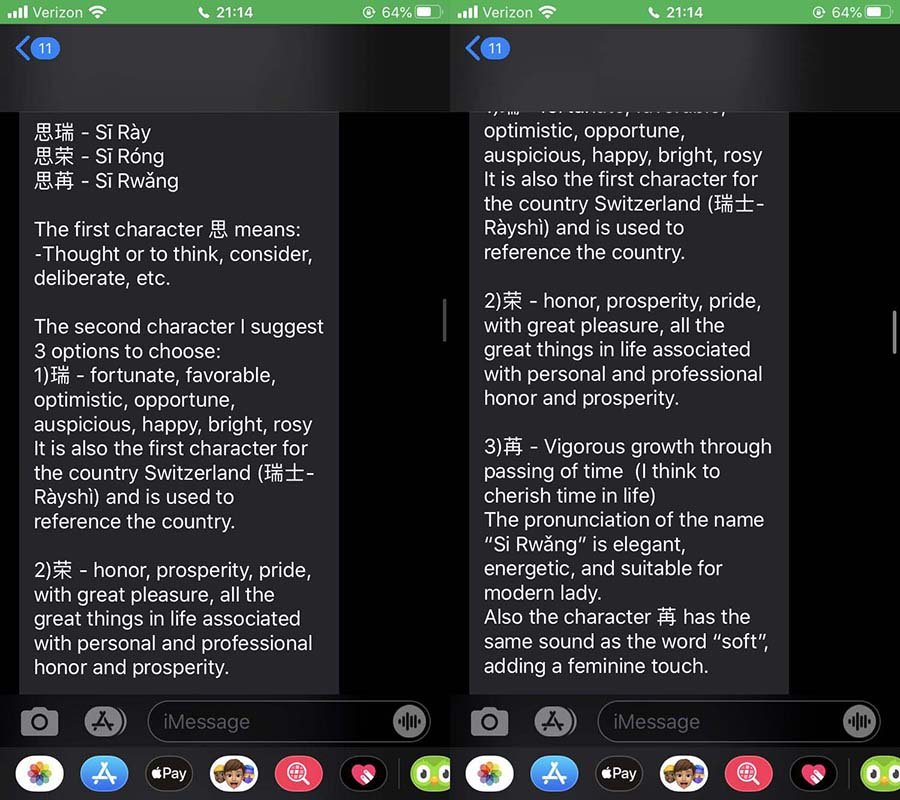
Sarah · 思苒 Sīrǎn
Phonetic
Since “Sarah” sounds like 沙拉 (salad), a friend offered three options that sounded like Sarah, each sharing the same first character. Sarah chose 思苒.
Hannah · 汉娜 Hànnà
Phonetic
“My English name is Hannah, so… 汉娜. Not much choice there, lol.” A clean, direct sound match.
Trenton · 夏川藤 Xiàchuānténg
Phonetic
After years of deliberation, Trenton settled on this as the best approximation of how his name is pronounced.
Jaap · 雅普 Yǎpǔ
Phonetic + meaning
Colleagues pronounced “Jaap” as Yǎpǔ and added characters. He embraced it only after a second foreigner independently gave him the same name. To him it reads “Elegant Universal.”
Anthony · 安东 Āndōng
Phonetic
His grandparents named him in Chinese first; his parents then chose “Anthony” based on the sound.
Jenna · 简娜 Jiǎnnà
Phonetic
The usual 珍娜 felt off, so a friend suggested 简娜 — closer to “Jen.” Her boyfriend’s mother, who speaks no English, now calls her 简娜 too.
Saverio · 习沙威 Xíshāwēi
Phonetic + fun
习 sounds like “Silli,” 沙威 like “Save/Savi” (and he loves building sandcastles). 威 came from an early suggestion by Michael 老师.
Mildly · 刘丽云 Liúlìyún
Phonetic + meaning
丽 (“beautiful”) sounds like the “ly” in Mildly; 云 (“cloud”) came from a love of clouds in Chinese art. Gifted by a teacher in Thailand in 2016.
② Meaning-based — names chosen for what they say
Vasil · 国王修 Guówángxiū
Meaning
“Vasil” comes from Greek for “king,” so he chose 王 (king). 国 nods to his surname Kolchev, and 修 (to cultivate/mend) is phonetically and tonally fitting.
Rory · 如海 Rúhǎi
Meaning + phonetic
It works phonetically with “Rory” and means “like the sea” — perfect for an ocean sailor and sailing instructor. His wife’s Beijing coworkers helped craft it.
Markus · 熊二弟 Xióng’èrdì
Meaning + nickname
熊 (bear) is his soul-animal and a real surname; 二弟 phonetically echoes his German nickname “Erdi.” A joke that became his official name.
Leigh · 邬乐 Wūlè
Meaning
Given by a foster family in Wuhan before adoption. He doesn’t know the full backstory, but loves that 乐 means happiness — it fits him.
③ Surname-anchored — built around a family connection
Filipe · 马小飞 Mǎ Xiǎofēi
Surname
马 comes from his Chinese husband’s surname; 小飞 just felt cool — and 飞 ties loosely back to “Filipe.”
Ricardo · 厉龙山 Lìlóngshān
Surname + meaning
厉 from 厉害 (awesome) instead of the usual 李; 龙 for his Dragon zodiac year (1988); 山 (mountain) because his surname Sierra means “mountain” in Spanish.
④ Gifted — names given by teachers, friends, or family
Alex · 朴翼 Pǔyì
Gifted
Given by his first GoEast teacher. Generously translated, it means “unadorned wings.”
Germano · 马杰 Mǎjié
Gifted
An elder said his old name had poor 风水 (feng shui), so he was given 马杰 instead.
Key takeaways
- A Chinese name is surname-first and usually 2–3 characters.
- Choose by sound, meaning, surname, or have one gifted — the best names blend two.
- Keep characters simple and positive, avoid direct transliterations, and always check with a native speaker.
- There’s no single “correct” name — the right one is recognizable, pronounceable, and meaningful to you.
Get your own Chinese name in seconds
Not sure where to start? Try our free Chinese Name Generator — it suggests authentic names based on your real name, gender, and the meaning you want.
Want your name pronounced perfectly — and to actually start speaking Mandarin? GoEast Mandarin runs online and Shanghai-based classes for all levels, from absolute beginner to advanced. Explore our Chinese courses →
Frequently asked questions
Do foreigners need a Chinese name?
It’s not mandatory, but it’s highly recommended if you live in or frequently visit China. A Chinese name makes you easier to pronounce and remember, helps with paperwork like bank accounts and driver’s licenses, and signals genuine respect for the culture.
How do I choose a Chinese name?
Pick one of four methods: match the sound of your original name, choose characters with a good meaning, build the name around a real Chinese surname, or have a teacher or friend give you one. Then keep it to two or three characters and check with a native speaker for any hidden slang.
How many characters should a Chinese name have?
Two or three characters total. The first is the surname; the given name is one or two characters. More than three characters tends to feel foreign rather than authentically Chinese.
Should my Chinese name sound like my English name or have a nice meaning?
Ideally both. Many of the best names echo the sound of the original name while also using characters with a positive meaning — for example 如海 (Rúhǎi) sounds like “Rory” and means “like the sea.”
Who is the most famous foreigner with a Chinese name?
Canadian performer Mark Rowswell, known across China by his Chinese name 大山 (Dàshān, “Big Mountain”), is widely considered the most famous foreigner in Chinese media. Other well-known examples include former Australian PM Kevin Rudd (陆克文 Lù Kèwén) and American actor Jonathan Kos-Read (曹操 Cáo Cāo).
Can I use a Chinese surname?
Yes. You can choose a real Chinese surname that sounds close to your own, or adopt one connected to a Chinese partner or family. Common safe choices include 王 (Wáng), 李 (Lǐ), and 刘 (Liú); avoid rare or awkward-sounding surnames.
What’s the most common mistake when picking a Chinese name?
Choosing characters purely by sound without checking their meaning, which can accidentally produce slang, a place name, or something unintentionally funny. Directly transliterating a Western name (like 约翰 for John) also reads as obviously foreign. Always verify your name with a native speaker first.
Where can I get a Chinese name?
You can use GoEast Mandarin’s free Chinese Name Generator for instant suggestions, or ask a Mandarin teacher or native-speaking friend to help craft one with a personal story behind it.