
New HSK levels for learning Chinese (Update 2026)
Get the new HSK 3.0 vocab list
See here the 2026 HSK exam dates and full schedule.
Biggest changes in the new HSK 3.0
The HSK 3.0 reform is the most significant overhaul of Chinese proficiency testing since 2010. Here is a summary of the five biggest structural changes — each one affects how you learn, what you study, and how you prove your level.
1. HSK expands from 6 levels to 9 — organized in three stages
The old HSK ran from HSK 1 to HSK 6. The new HSK 3.0 system has nine levels (Bands 1–9), grouped into three stages:
| Level | Band |
|---|---|
| 初等 (Elementary Level) | Band 1 |
| Band 2 | |
| Band 3 | |
| 中等 (Intermediate Level) | Band 4 |
| Band 5 | |
| Band 6 | |
| 高等 (Advanced Level) | Band 7 - 9 |
2. The new bands are harder than the old HSK levels — and the vocabulary load has changed
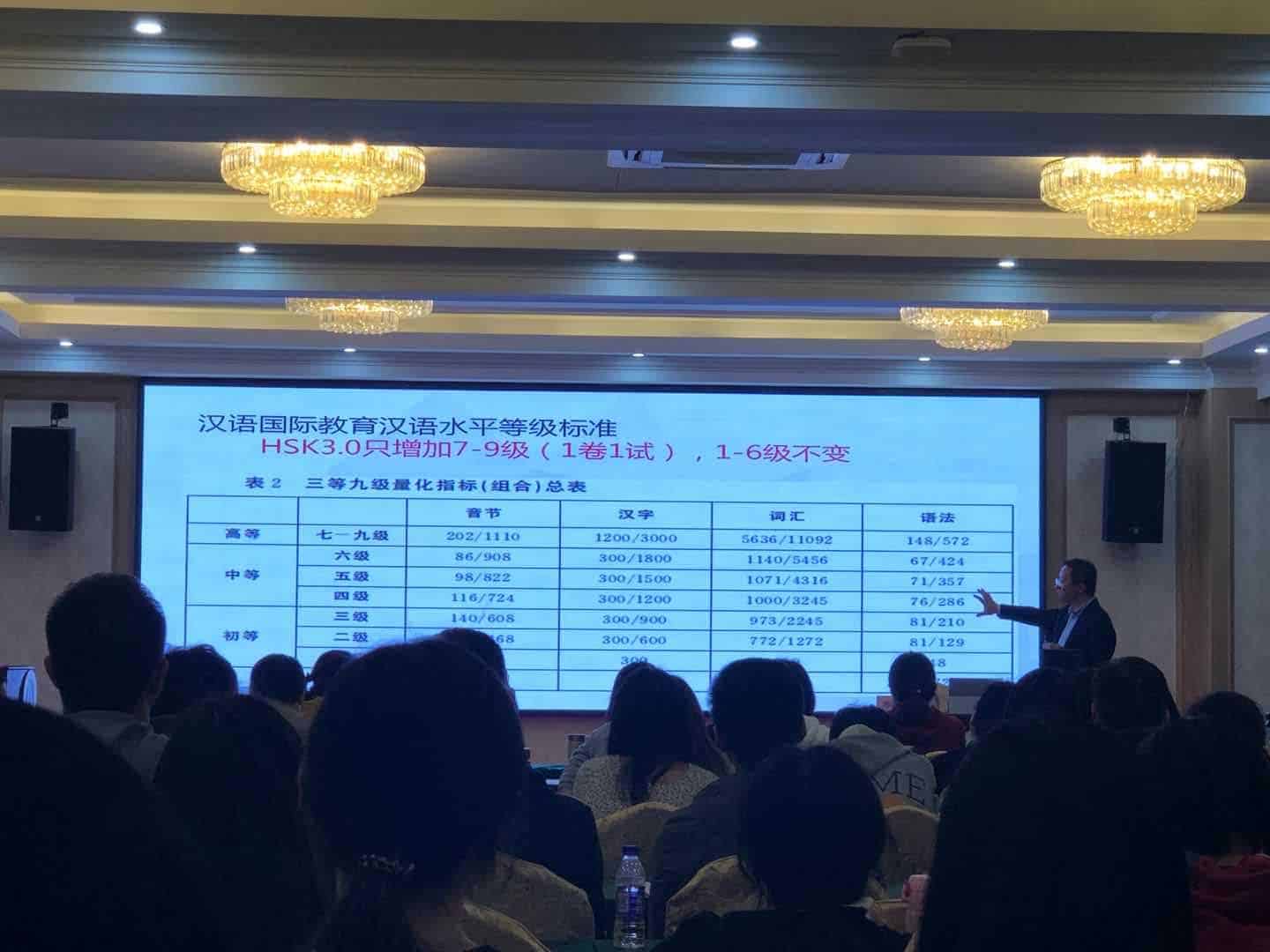
| Old HSK level | Old vocabulary required | New vocabulary required | Difference from old HSK | New HSK |
|---|---|---|---|---|
| HSK 1 | 150 | 500 | +350 | Band 1 |
| HSK 2 | 150/300 | 772/1272 | +972 | Band 2 |
| HSK 3 | 300/600 | 973/2245 | +1645 | Band 3 |
| HSK 4 | 600/1200 | 1000/3245 | +2045 | Band 4 |
| HSK 5 | 1300/2500 | 1071/4316 | +1816 | Band 5 |
| HSK 6 | 2500/5000 | 1140/5456 | +456 | Band 6 |
| n/a | n/a | 5636/11092 | n/a | Band 7-9 |
The number before the slash is the new vocabulary introduced at that level; the number after the slash is the total accumulated vocabulary at that stage.
A rough mapping: if you were at old HSK 4, you now fall around Elementary Band 2 (B2). Old HSK 5 maps to approximately B3. Old HSK 6 is roughly equivalent to B6. The most meaningful expansion happened between the old HSK 5 and HSK 6 — the new system adds two bands (B4 and B5) in that gap, making intermediate-to-advanced progression far more granular.
Note: The official CTI vocabulary syllabus published in November 2025 reduced some word counts from the original 2021 proposal (for example, the original B1 was proposed at 500 words). Always use the current official syllabus when planning your study.
3. Many completely new words appear at every level
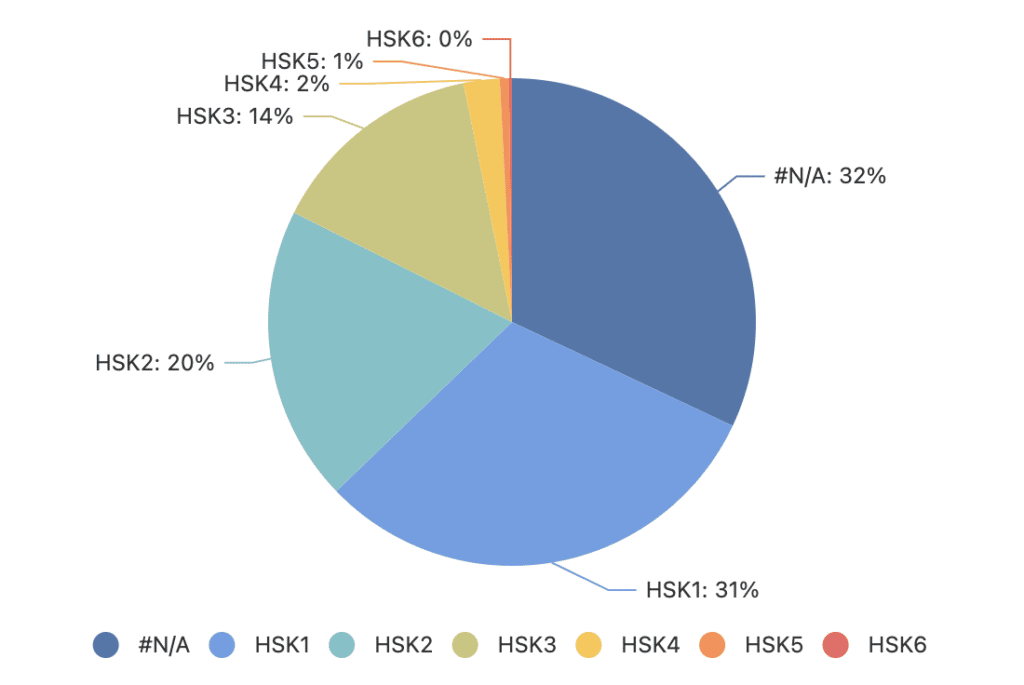
GoEast’s curriculum team analyzed the 500 words required by the new Band 1 (B1) when the framework was first released and found that around 100 of them never appeared in the old HSK 1–3 requirements. The new vocabulary reflects how Chinese is actually used in modern China — some outdated terms from the old system (like 传真 chuánzhēn, fax machine) have been dropped in favor of contemporary usage.
4. Hanzi handwriting and translation are now tested skills
Chinese character handwriting is required from the early bands: Band 1 requires writing 100 basic characters from memory and copying at a minimum of 10 characters per minute, rising to 200 characters at Band 2 (15/min) and 300 characters at Band 3 (20/min).
Translation (Chinese-to-English and English-to-Chinese) becomes an assessed skill from Band 4 onward. At the advanced level (Bands 7–9), simultaneous interpretation is included. This is a fundamental change from the old HSK, where translation was never part of the exam.
5. Speaking is now integrated — not a separate test
Under HSK 3.0, speaking is built into the main exam structure from Band 3 upward, rather than being a separate HSKK test. For HSK 3.0 Levels 3–6, you must register for both the written and speaking components simultaneously. This signals a shift toward assessing real communicative ability rather than academic knowledge alone.
How the new HSK 3.0 levels affect your Chinese learning
1. The new standards are closer to real-world Chinese ability
The old HSK system was deliberately designed with a low entry barrier. The result was that some students who passed HSK 4 still struggled to hold a natural conversation in Chinese. At GoEast, we always noted that old HSK 6 did not equal C2 proficiency, and that old HSK 3 — which many schools labeled “intermediate” — was in our view still elementary.
The new framework fixes this. If your level drops on paper when you map to HSK 3.0, that is not a setback — it is the system finally giving you an accurate picture. Your conversational ability is unchanged; what changed is the measurement.
2. The three advanced bands (B7–B9) provide a true ceiling for Chinese mastery
Bands 7 to 9 are designed for learners pursuing Chinese-language university degrees, professional translation and interpretation, sinology, international policy, law, or cross-border trade. There is one exam for this tier; the band you receive (7, 8, or 9) is determined by your score. Advanced-level learners must know 11,092 vocabulary words, 3,000 Chinese characters (of which 1,200 must be written from memory), and 1,110 pinyin syllables.
3. Better learning materials are now arriving
Most of the authoritative Chinese textbooks were written in the 1990s or early 2000s. The HSK 3.0 framework — finalized with the official CTI syllabus in November 2025 — signals the end of those materials as the dominant standard. Updated textbooks aligned to the new vocabulary lists and skill requirements are now entering the market, and GoEast’s curriculum team has been developing new course materials accordingly.
New HSK 3.0 Elementary Level (Band 1 to Band 3)
Elementary level covers Bands 1, 2, and 3. Learners at this stage should be able to understand simple Chinese texts, hold daily conversations on a limited range of topics, use basic communication strategies, and demonstrate some awareness of Chinese culture.
Compared to old HSK 1–4/5, two major additions stand out: Chinese characters are required from the very beginning (old HSK 1 and 2 only required Pinyin on exams), and cultural and cross-cultural communication competence is explicitly assessed.
For detailed course information: New HSK Band 1 course (B1), New HSK Band 2 course (B2), New HSK Band 3 course (B3).
Language topics — B1, B2, B3
Band 1: Personal information, daily routine, food, transportation, hobbies. Students should be able to use polite expressions in appropriate situations and retrieve information they need in a public environment.
Band 2: Basic social life, family, school, shopping, dining, personal feelings. Students should be able to order food at a Chinese restaurant, hold a simple conversation, and fill in a personal information form.
Band 3: Travel, school and work descriptions, entertainment, festivals, education, occupations. Example tasks include discussing plans for Chinese New Year or composing a formal oral or written invitation.
Listening — B1, B2, B3
Band 1: Understand words, phrases, and single sentences (up to 80 words). Standard, clear Mandarin at no slower than 100 characters per minute. Can understand more complex sentences with visual support.
Band 2: Understand simple dialogues on daily topics (up to 150 words) at no slower than 140 characters per minute. Can understand more complex dialogue with gesture or facial expression support.
Band 3: Understand longer sentences, short paragraphs, and simple speeches (up to 300 words). Standard Putonghua or slightly accented Mandarin at normal speed (approximately 180 characters per minute). Can infer meaning from tone, pace, and emotion.
Speaking — B1, B2, B3
Band 1: Correctly pronounce 269 pinyin syllables. Ask and answer simple questions.
Band 2: Correctly pronounce 468 pinyin syllables. Hold short conversations or monologues. Use appropriate small talk in social situations.
Band 3: Correctly pronounce 608 pinyin syllables. Comfortable in daily conversation; able to take part in basic discussions.
Reading — B1, B2, B3
Band 1: Recognize 269 pinyin syllables, 300 Chinese characters, and 500 vocabulary words. Read simple texts (up to 100 characters) at no slower than 80 characters per minute, with pinyin or picture support. Recognize common signs, notes, forms, and maps.
Band 2: Recognize 468 pinyin syllables, 600 Chinese characters, and 1,272 vocabulary words. Read texts (up to 200 characters) at no slower than 100 characters per minute with dictionary or picture support. Extract information from announcements and emails.
Band 3: Recognize 608 pinyin syllables, 900 Chinese characters, and 2,245 vocabulary words. Read texts (up to 300 characters) at no slower than 120 characters per minute. Understand narrative and explanatory texts. Use a dictionary to work out new words. Apply skimming and scanning skills.
Writing — B1, B2, B3
Band 1: Handwrite 100 basic characters from memory (e.g., 三 sān, 鸡 jī). Understand basic strokes, stroke order, and common punctuation. Copy more complex characters at no slower than 10 per minute. Fill in personal information forms and leave a simple note.
Band 2: Handwrite 200 basic characters from memory (e.g., 肉 ròu, 慢 màn). Copy characters correctly at no slower than 15 per minute. Compose a paragraph of at least 100 characters on familiar topics.
Band 3: Handwrite 300 basic characters from memory (e.g., 喜 xǐ, 影 yǐng). Copy characters correctly at no slower than 20 per minute. Compose emails, announcements, or essays of at least 200 characters within a set time limit.
New HSK 3.0 Intermediate Level (Band 4 to Band 6)
The new intermediate bands are broadly comparable to a demanding interpretation of the old HSK 5.5 to HSK 6. This is the level at which learners are genuinely equipped to work and study in China using Mandarin. Six key differences define intermediate HSK 3.0.
1. From controlled practice to real-world Chinese
Elementary-level listening and speaking exercises use slower, clearer Mandarin with carefully chosen vocabulary and short sentences. At intermediate level, everything is real: native speakers at normal or fast speed, self-corrections, regional accents, background noise. This is designed to test whether a learner can truly function in a Chinese working or academic environment.
2. Topics expand from personal to societal
Content moves beyond personal information into broader social topics — community life, environmental issues, business communication, culture comparisons. Learners must express opinions on social events, give constructive feedback, and engage in professional correspondence.
3. Context, sarcasm, and cultural subtext are assessed
Intermediate learners need to understand not just the words spoken but the meaning behind them. For example: “你真是细心极了!” (Nǐ zhēnshi xìxīn jíle!) literally means “You are really so careful!” — but heavy emphasis in context often signals the opposite: “You are too careless.” Understanding this kind of cultural and tonal meaning is now an exam requirement.
4. Writing involves extended articles, not just sentences
Writing at this stage means composing well-structured articles that express opinions with appropriate style, not just filling in information. Band 6 requires a 600-character argumentative essay with varied rhetorical devices.
5. Translation becomes a formal skill from Band 4
Students are required to translate in both directions (Chinese ↔ English) for casual and semi-formal occasions. By Band 6, translation should be smooth and accurate across a variety of text styles.
6. Intermediate HSK 3.0 is the new employment and study threshold
Many companies previously required old HSK 5 or HSK 6 for Chinese-language roles. Under HSK 3.0, Intermediate Band 6 — which carries a larger vocabulary load than old HSK 6 — is becoming the expected minimum for working or studying in Chinese in China.
Overall requirements — New HSK B4, B5, B6
- Understand Chinese texts on a wide variety of topics and themes
- Start and sustain smooth Chinese conversations
- Discuss complex topics in paragraphs — daily life, work, social and cultural issues
- Use common communication strategies effectively
- Demonstrate good knowledge of Chinese culture and cross-cultural communication
Language topics — B4, B5, B6
Band 4: Community life, health, school, office communication, animals, plants. Example tasks: communicating effectively with a doctor; writing a recruitment advertisement and answering candidate questions.
Band 5: Interpersonal relationships, lifestyle, learning methods, environment, social issues. Learners should be able to express opinions on social events and write appropriate professional emails.
Band 6: Business communication, corporate affairs, conflict resolution, cultural comparison. Learners should be able to read and comment on Chinese news and discuss Chinese history and culture across contexts.
Listening — B4, B5, B6
Band 4: Understand casual and formal dialogues on familiar topics (up to 400 characters) in natural Mandarin at 180–200 characters per minute, including accented speech. Identify redundancy and pauses without losing the main meaning. Recognize sarcasm and humor in Chinese.
Band 5: Understand dialogues on familiar topics (up to 500 characters) at 200–220 characters per minute, including accented speech. Maintain comprehension despite repetition, unnecessary pauses, or background noise.
Band 6: Understand dialogues and texts on familiar topics (up to 600 characters) at 220–240 characters per minute, including fast native-speaker speech with accents. Understand true intent behind imperfect or self-correcting speech. Fully grasp culture-loaded meanings.
Speaking — B4, B5, B6
Band 4: Pronounce 724 pinyin syllables correctly and naturally. Deliver monologues and speeches in paragraph form. Narrate events, describe situations, and express opinions fluently and accurately.
Band 5: Pronounce 822 pinyin syllables correctly and naturally. Deliver structured paragraphs with complex sentences. Describe events in detail and express well-reasoned opinions with precise vocabulary.
Band 6: Pronounce 908 pinyin syllables correctly and naturally. Deliver complex paragraph-level speeches. Describe situations and feelings in detail, hold discussions and negotiations with logical, precise, and natural language.
Reading — B4, B5, B6
Band 4: Recognize 724 pinyin syllables, 1,200 Chinese characters, and 3,245 vocabulary words. Read texts (up to 500 characters) at no slower than 140 characters per minute. Extract key information from narrative, explanatory, and argumentative texts. Read between the lines.
Band 5: Recognize 822 pinyin syllables, 1,500 Chinese characters, and 4,316 vocabulary words. Read texts (up to 700 characters) at no slower than 160 characters per minute. Summarize main points and add personal commentary. Apply information-searching skills.
Band 6: Recognize 908 pinyin syllables, 1,800 Chinese characters, and 5,456 vocabulary words. Read texts (up to 900 characters) at no slower than 180 characters per minute. Accurately summarize structure, logic, and main points. Fully understand contextual and cultural subtext.
Writing — B4, B5, B6
Band 4: Handwrite an additional 100 intermediate characters beyond the 300 basic (e.g., 赞 zàn, 疑 yí). Familiar with compound character structures. Compose narration or explanatory articles of at least 300 characters.
Band 5: Handwrite an additional 250 intermediate characters beyond the 300 basic (e.g., 碍 ài, 鬼 guǐ). Analyze character structures. Compose narration, explanation, and simple argumentation of at least 450 characters. Demonstrate basic writing style awareness.
Band 6: Handwrite an additional 400 intermediate characters beyond the 300 basic (e.g., 傲 ào, 蹲 dūn). Analyze complex character structures comfortably. Compose narration, explanation, and argumentation of at least 600 characters. Use rhetoric such as metaphor appropriately.
Translation — B4, B5, B6
Band 4: Basic translation ability (Chinese ↔ English). Convey main ideas and cultural factors. Perform basic interpretation in casual settings. Translate written Chinese correctly.
Band 5: Translate complete meaning with appropriate handling of cultural factors. Perform consecutive interpretation in casual settings. Translate written Chinese with relative accuracy.
Band 6: General translation competence (Chinese ↔ English). Handle cultural factors naturally. Perform smooth interpretation in casual settings. Translate a variety of written Chinese styles accurately.
New HSK 3.0 Advanced Level (Band 7 to Band 9)
The advanced level — officially called 高等 (gāoděng) — covers HSK Bands 7, 8, and 9. There is one exam; the band awarded depends on your score. The vocabulary requirement for the full advanced tier is 11,092 words, 3,000 characters (1,200 written from memory), and 1,110 pinyin syllables.
Who needs to reach Advanced Level HSK 3.0?
Not everyone does. Bands 7–9 are primarily for learners who are — or plan to become — one of the following:
- University or postgraduate students enrolled in Chinese-language programs in China
- Professional translators, Chinese language educators, or sinologists
- International relations and policy professionals
- Cross-border trade practitioners
- Lawyers or regulatory analysts working with Chinese documentation
Key characteristics of Advanced Level HSK 3.0
All learning materials at this level are professional and domain-specific, with a strong emphasis on academic research. Learners are expected not just to speak and write correctly, but to do so with elegance. The cultural expectation is that learners understand Chinese cultural connotations and implicit meaning to such a depth that they think in Chinese — not translating from their native language — and approach ideas the way native educated Chinese speakers do.
Language topics — B7, B8, B9
Band 7: Social etiquette, science and technology, arts, physical education, psychology, and other professional fields. Tasks include participating in formal academic conferences or reading course materials for a specific major.
Band 8: Linguistics, politics, economics, law, philosophy, history. Learners must be able to discuss political affairs and philosophical topics accurately, and express opinions, raise questions, and make formal appeals in dispute situations.
Band 9: Academic research, formal policy and regulation, international business, and diplomatic affairs. Learners must be able to conduct formal business negotiations and read regulatory documents and academic papers.
Listening — B7, B8, B9
Band 7: Understand lectures on general topics and news (up to 800 characters) at normal or fast pace. Capture main facts and key opinions accurately regardless of environment. Basic grasp of cultural connotations.
Band 8: Understand lectures on professional and specialized topics (up to 800 characters) at normal or fast pace. Accurately capture main facts, opinions, and details. Understand and navigate cultural connotations.
Band 9: Understand any spoken content at any speed. Analyze and extract information even when it is not fully or clearly expressed. Fully handle social and cultural connotations.
Speaking — B7, B8, B9
Band 7: Express opinions and hold debates with varied sentence structures. Standard natural pronunciation. Adapt speech style to context. Use rhetorical devices such as metaphor. Basic cross-cultural communication awareness.
Band 8: Deliver speeches and simultaneous debates with varied, complex language. Standard, natural pronunciation and smooth delivery. Use varied rhetorical methods. Good cross-cultural communication awareness.
Band 9: Excellent speaking ability across topics and formats. Standard natural pronunciation, fluid delivery. Apply varied rhetorical methods precisely. Excellent cross-cultural communication.
Reading — B7, B8, B9
Band 7: Read complex texts on selected topics at no slower than 200 characters per minute. Some understanding of Chinese thinking patterns and expression habits. Understand cultural subtext. Apply information-searching skills.
Band 8: Read complex professional texts at no slower than 220 characters per minute. Good understanding of Chinese thinking and expression. Understand cultural and social background. Identify language problems and logical flaws in texts.
Band 9: Read any complex text at no slower than 240 characters per minute. Deep understanding of Chinese thinking and expression. Full command of cultural and social context.
Writing — B7, B8, B9
Band 7: Handwrite 500 advanced characters. Write argumentative, explanatory, and general essays as well as professional papers of appropriate length. Clear structure and logic. Apply multiple rhetorical methods correctly.
Band 8: Handwrite 500 advanced characters. Write essays and professional papers of substantial length with clear structure, correct format, and varied rhetorical methods including idioms.
Band 9: Handwrite 500 advanced characters. Write graduate-level thesis. Clear structure, correct format, great logical expression. Apply multiple rhetorical methods correctly.
Translation — B7, B8, B9
Band 7: Basic professional translation skills. Perform consecutive and accompanying interpretation on formal occasions. Accurately translate general, argumentative, and explanatory essays.
Band 8: Professional-level translation skills. Perform consecutive and accompanying interpretation on formal occasions smoothly. Accurately translate lengthy and complex texts.
Band 9: Strong professional translation skills. Perform simultaneous interpretation on formal occasions smoothly and quickly. Accurately and elegantly translate a wide variety of article types.
Your questions about the new HSK 3.0 answered
When does HSK 3.0 officially take effect?
The full global rollout of HSK 3.0 is July 1, 2026. A global pilot of Levels 1–6 was held on January 31, 2026 at 44 authorized test centers across more than 20 countries. HSK 7–9 has been running since November 2022. Before July 2026, standard exams still follow the HSK 2.0 (six-level) format — so which materials you should use depends on when you plan to test.
Do I need to buy new books?
Yes, for HSK 3.0 preparation you will want materials aligned to the official CTI vocabulary syllabus, which was published in November 2025. The old HSK 1–6 books are not aligned to the new vocabulary lists or skill requirements. New materials entered the market in 2025–2026 and more are arriving throughout 2026.
Will my old HSK certificates still be valid?
Yes. Certificates from the old HSK 1–6 system remain valid. They will not be automatically converted to HSK 3.0 band equivalents, but institutions that require them will generally still honor them (check the specific policy of your university or employer, as validity periods may apply).
Why is the HSK system changing?
The old HSK, while effective at lowering the barrier to entry, was criticized for giving learners an inflated sense of readiness. Students who passed old HSK 6 could still struggle to read Chinese novels or work professionally in Mandarin. Old HSK 6 did not fully correspond to C2 proficiency in European language frameworks. The new system adds three advanced levels, spaces out the intermediate progression more meaningfully, and ties skill requirements more tightly to what is actually needed in Chinese workplaces, universities, and academic settings.
What is the minimum HSK level required to study or work in China?
Under HSK 3.0, Intermediate Band 6 (B6) is expected to become the practical threshold for working and studying in Chinese in China — comparable to old HSK 6 but requiring approximately 500 more vocabulary words. This is more rigorous than the old HSK 5 standard many companies and universities previously used.
Is translation tested in both directions?
Yes. Translation is required both from and to Chinese, starting primarily with English from Band 4. Advanced bands (7–9) include simultaneous interpretation requirements.
Is handwriting required from the very beginning?
Under the framework announced in 2021, handwriting from memory was required from Band 1. The official HSK 3.0 syllabus finalized by CTI in November 2025 introduced some adjustments to how handwriting requirements are structured across levels — check the latest official exam specifications at chinesetest.cn for the current requirements at each level before preparing.
Will there be confusion between old HSK numbers and new HSK 3.0 numbers?
Yes, and it is worth being explicit. At GoEast, we refer to the new levels as B1 to B9 to distinguish them from the old HSK 1–6. Old HSK 2 and new B2 are very different things. As HSK 3.0 becomes the global standard from July 2026, this distinction will become clearer over time — just as the 2010 revision eventually replaced the original 11-level system.
Do the advanced bands include grammar requirements?
Yes. The advanced tier (B7–B9) includes 572 key grammar points — 142 more than Band 6.
How is cultural competence tested?
Cultural knowledge is integrated throughout learning materials and exams at every level, not treated as a standalone section. At GoEast, cultural context has always been woven into lessons — through scripted video content, teacher discussion in live classes, and a dedicated cultural article at the end of each chapter.
Are the new vocabulary words from spoken or written Chinese?
Both. The HSK 3.0 vocabulary lists cover contemporary spoken and written Chinese — words you will encounter in modern China, not just in formal texts.
History of the HSK
The first version: 11 levels (1992–2010)
HSK was introduced in 1992 with 11 levels. It was the first standardized test of Chinese proficiency for non-native speakers. The system reflected the academic priorities of the time, including scientific terminology, classical expressions, and vocabulary that was considered standard in formal Chinese usage of that era.
The second version: 6 levels (2010–2026)
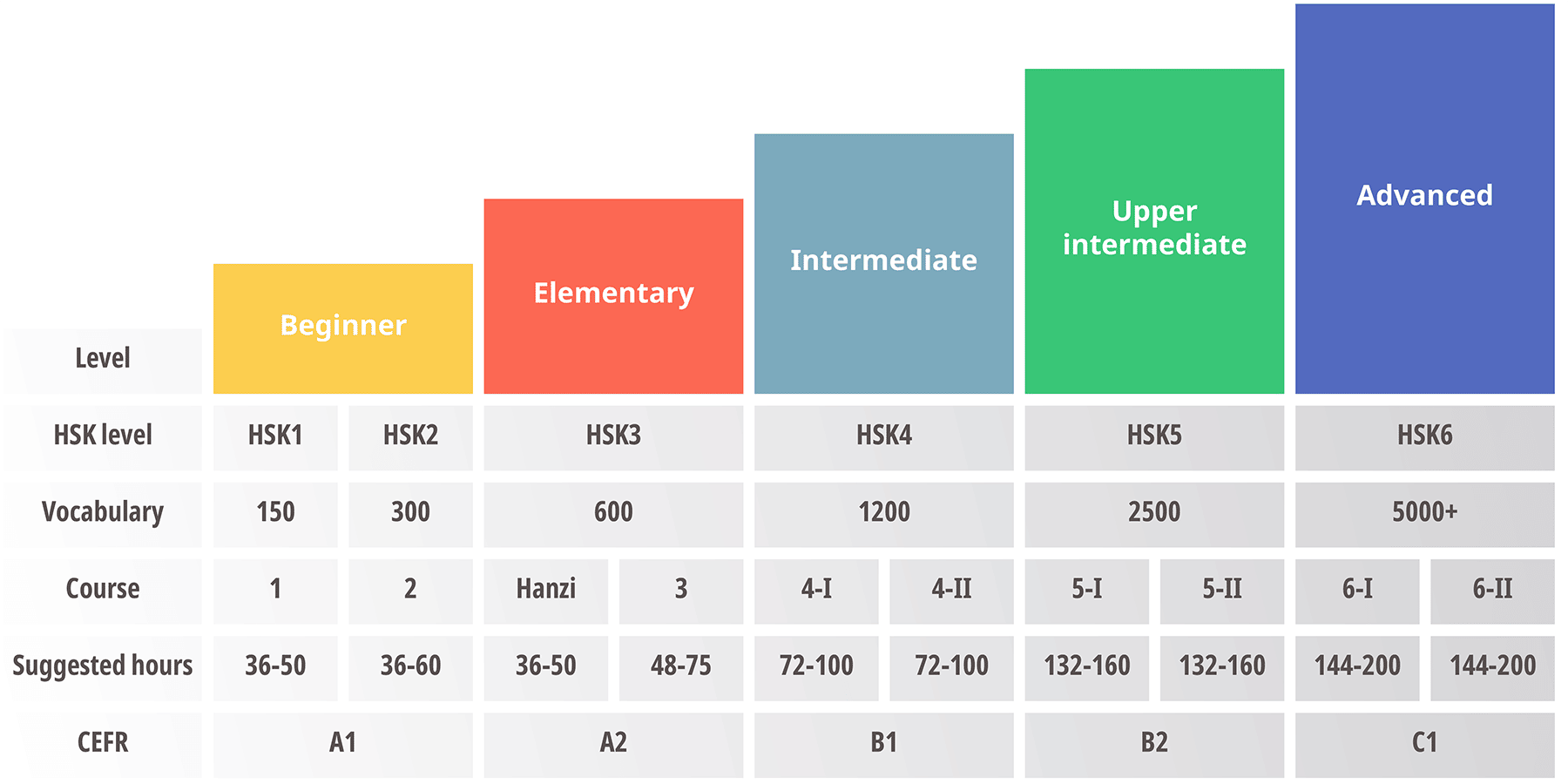
In 2010, the 11 levels were simplified into the familiar HSK 1–6 system (now referred to as HSK 2.0). The revision removed scientific jargon, sayings, and outdated vocabulary — 4,189 words were dropped and 349 added. The simplified structure made Chinese proficiency testing more accessible worldwide, with HSK 1 and 2 serving absolute beginners and HSK 5–6 as the advanced tier. In total, around 5,000 words spanned the entire system.
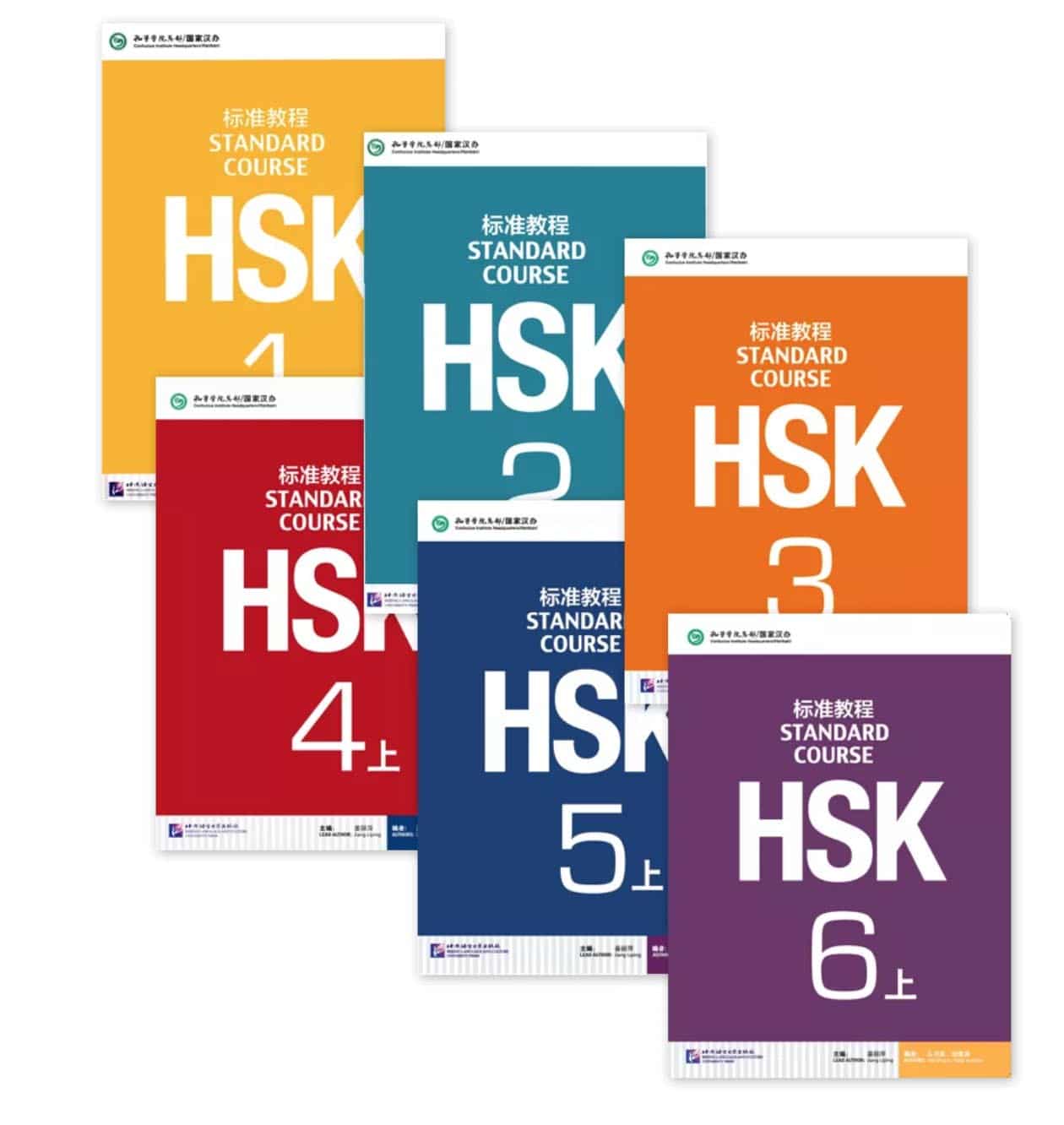
At GoEast, we have always used the HSK system as a structural framework for courses — not as a rigid blueprint. The vocabulary progression works well: characters learned in HSK 1 reappear as components of compound words in later levels (for example, 谢谢 Xièxiè at HSK 1 connects to 感谢 Gǎnxiè and 感觉 Gǎnjué at HSK 4). We have always added practical everyday vocabulary that the test system omitted, to close the gap between classroom and real Chinese life. The HSK 3.0 framework moves in the same direction — making it feel like a natural continuation of the approach GoEast has taken for years.
Non-HSK Chinese language learning paths
HSK provides the official framework for grading Chinese proficiency, but it is not the only valid path. GoEast offers Spoken Chinese and Business Chinese courses for learners whose goals are conversational fluency or professional communication rather than academic certification. The HSK 3.0 advanced bands (B7–B9) are primarily literature and academic research oriented — relevant for sinologists and degree students, but not necessarily the best target for someone who simply wants to communicate confidently in Chinese daily life or business contexts.