
Chinese Characters: Guide, Types, Count & Learning Tips
Hanzi, or Chinese characters (汉字), are one of the world’s oldest continuously used writing systems — and yes, they’re learnable. At GoEast Mandarin, our teachers have helped thousands of students master Chinese characters since 2012. This guide covers everything: how many characters exist, the six official types, the complete history, stroke order rules, simplified vs. traditional differences, and memorization techniques that actually work.
Content reviewed by Michael Wang, senior Mandarin teacher at GoEast Mandarin with over 20 years of Hanzi instruction experience. June 2026.
How Many Chinese Characters Are There?
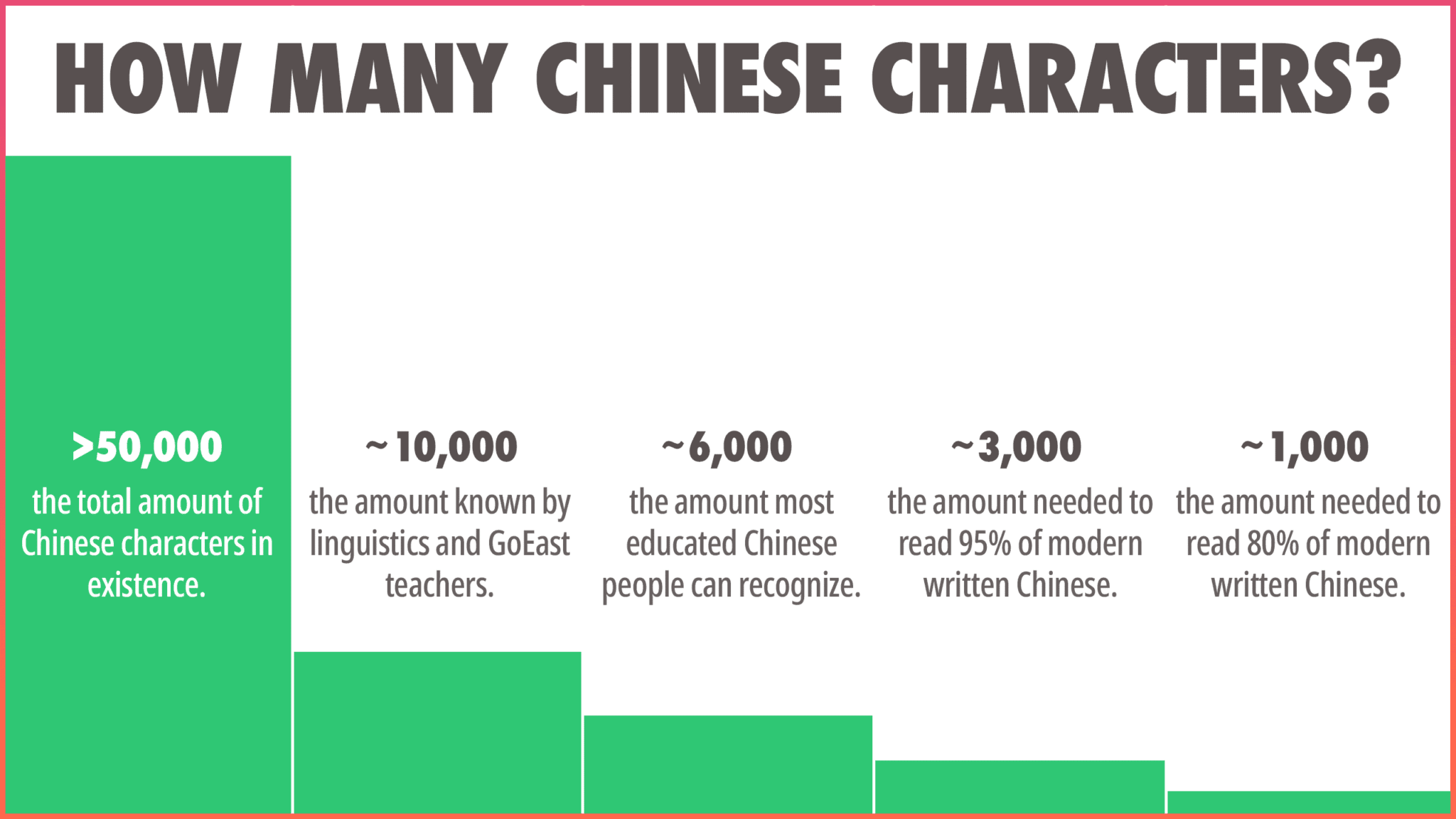
The short answer depends on what you’re counting. The most comprehensive Chinese dictionary, the Zhonghua Zihai (中华字海), lists over 85,000 characters — but the vast majority are archaic variants you’ll never encounter in daily life. Here are the numbers that actually matter:
- >85,000 Chinese characters exist across all historical records and dictionaries
- ~10,000 characters are known by GoEast teachers, linguists, translators, and Chinese history specialists
- ~6,000 characters are recognized by normally educated Chinese people
- ~3,500 characters let you read 99% of modern Chinese written text
- ~1,000 characters let you read 80% of everyday Chinese media
How Many Chinese Characters Do You Need by HSK Level?
If you’re learning Mandarin with a structured curriculum, here’s how character knowledge maps to the HSK exam levels:
| Characters Known | Reading Coverage | HSK Level (New HSK 3.0) | Practical Ability |
|---|---|---|---|
| 300–500 | ~50% | HSK 1–2 | Basic survival vocabulary |
| ~1,000 | ~80% | HSK 3 | Read everyday signs, menus, messages |
| ~2,500 | ~97% | HSK 4–5 | Read news articles, social media |
| ~3,500 | ~99% | HSK 5–6 | Read novels, official documents |
| 6,000+ | ~99.9% | Above HSK 6 | Educated native speaker level |
Want to know where you stand? Take GoEast’s free Chinese level assessment →
The 6 Types of Chinese Characters (六书 Liù Shū)
Traditional Chinese linguistics classifies all characters into six categories called 六书 (liù shū), meaning “six writings” or “six scripts.” This framework was formalized during the Han dynasty and remains the standard academic classification today. Understanding these six types is one of the most powerful shortcuts for learning new characters — once you recognize the underlying logic, you can often guess the meaning or pronunciation of an unfamiliar character rather than memorizing it cold.
1. Pictograms (象形字 Xiàngxíng zì)
Pictograms are the oldest type of Chinese character — stylized drawings of real-world objects. Even in their modern simplified forms, you can often trace the visual logic back to the original picture. Pictograms make up a relatively small percentage of all characters, but they form the building blocks for the other five types.
Examples: 日 (rì) = sun (originally a circle with a dot); 月 (yuè) = moon (a crescent); 龟 (guī) = turtle (a turtle viewed from the side); 山 (shān) = mountain (three peaks).

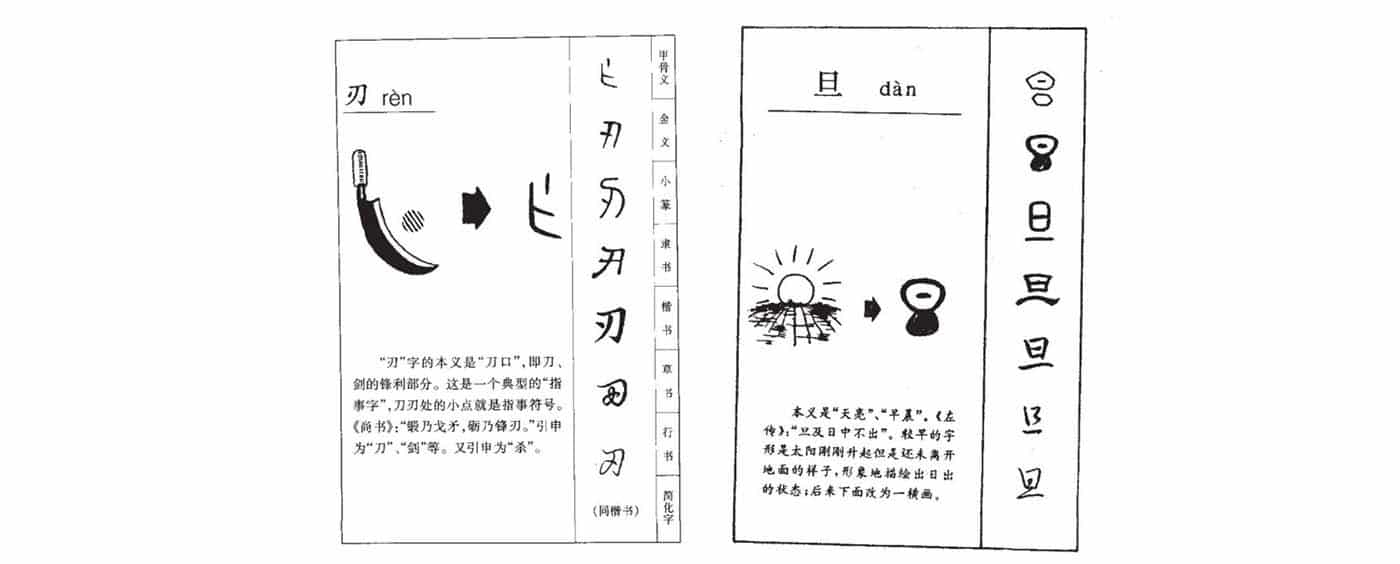
2. Self-Explanatory / Indicative Characters (指事字 Zhǐshì zì)
These are a pictograph with one or two strokes added to indicate an abstract quality or location that the picture alone can’t convey. Also called “referent characters” in some classifications.
Examples: 刃 (rèn) = blade — a knife (刀) with a dot marking the sharp edge; 旦 (dàn) = dawn — the sun (日) rising above a horizontal line representing the horizon; 上 (shàng) = above; 下 (xià) = below.
3. Compound Ideograms (会意字 Huìyì zì)
Compound ideograms combine two or more existing characters to create a new, related meaning. The logic is often beautifully intuitive once explained.
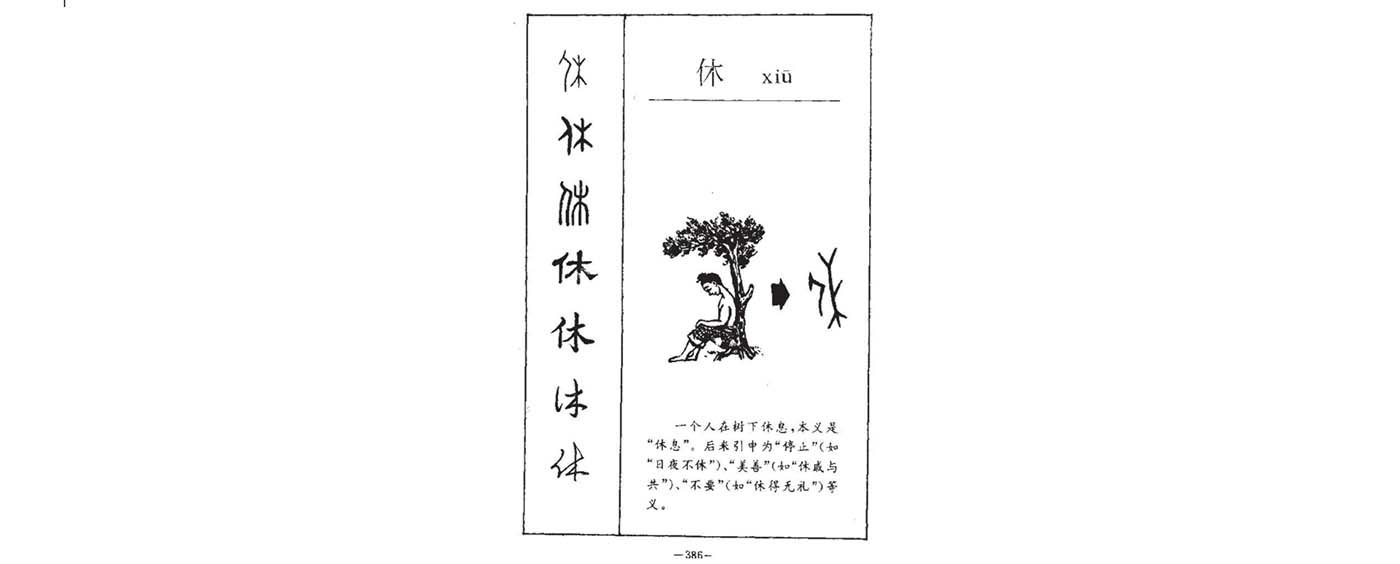
Examples: 休 (xiū) = rest — a person (人) leaning against a tree (木); 明 (míng) = bright — the sun (日) plus the moon (月); 森 (sēn) = forest — three trees (木木木); 众 (zhòng) = crowd — three people (人人人).
4. Phono-Semantic Characters (形声字 Xíngshēng zì)
This is by far the largest category — roughly 80–90% of all Chinese characters fall into this type. Each character has two components: one that hints at the meaning (semantic radical) and one that hints at the pronunciation (phonetic component). Note that pronunciation has shifted significantly over the centuries, so the phonetic clue is approximate rather than exact in modern Mandarin.
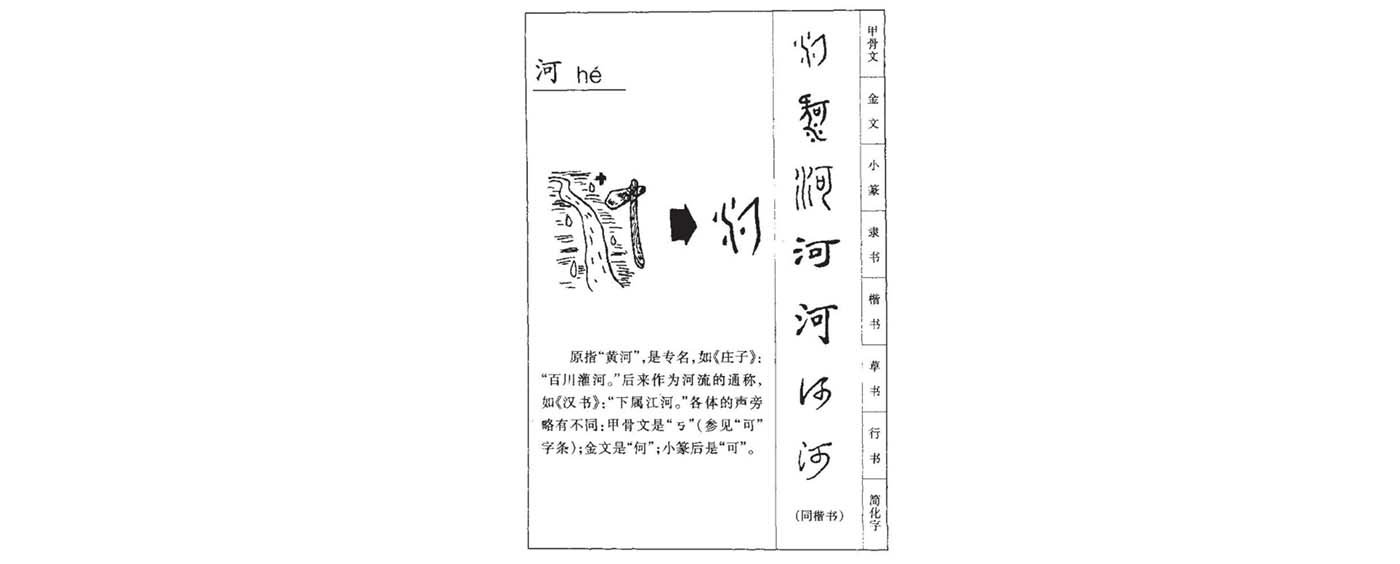
Examples: 河 (hé) = river — the water radical (氵) signals meaning; 可 (kě) signals approximate sound; 请 (qǐng) = please/invite — speech radical (讠) signals communication; 青 (qīng) signals sound; 妈 (mā) = mother — woman radical (女) + 马 (mǎ) for sound.
5. Mutually Explanatory / Transfer Characters (转注字 Zhuǎnzhù zì)
This is one of the more debated categories among linguists. Transfer characters refer to pairs of characters that originally had interchangeable meanings but diverged over time as the language evolved. They share a semantic relationship and often a similar root.
The classic example: 考 (kǎo) = to test/examine and 老 (lǎo) = old/elderly. Historically these were used interchangeably in some contexts (elderly people examining/being examined), but their meanings gradually specialized. Another pair: 窍 (qiào) = hole/opening and 空 (kōng) = empty/hollow.
6. Phonetic Loan Characters (假借字 Jiǎjiè zì)
Loan characters are among the most fascinating in Chinese — they’re characters that were “borrowed” to write a word with the same or similar sound, even though the meaning is completely different from the original character. This is similar to how ancient scribes repurposed existing symbols for new grammatical or abstract concepts.
A well-known example: 来 (lái) originally depicted a wheat plant (pictogram). Because the word “to come” in ancient Chinese was pronounced similarly to the word for wheat, the wheat character was borrowed to mean “to come” — and eventually the wheat meaning was dropped entirely. Today 来 means only “to come.” Other examples include 难 (nán) — originally depicted a bird (隹), borrowed for the abstract meaning “difficult.”
History of Chinese Characters (汉字)

Chinese characters are among the oldest continuously used writing systems in the world. According to legend, they were invented by Cangjie (仓颉) around 5,000 years ago — a bureaucrat serving under the legendary Yellow Emperor. Cangjie was said to have four eyes, allowing him to observe the patterns of nature with extraordinary clarity. He drew inspiration from the footprints of birds and animals, and the shapes of the world around him. The story goes that when he created writing, grain rained from the sky and the gods wept at night — because they feared humans, armed with the power of writing, would abandon farming for commerce and suffer famine.
From those mythological origins, the evolution of Chinese characters can be traced through distinct historical periods.
5000 BC – 4000 BC: Neolithic Signs in China
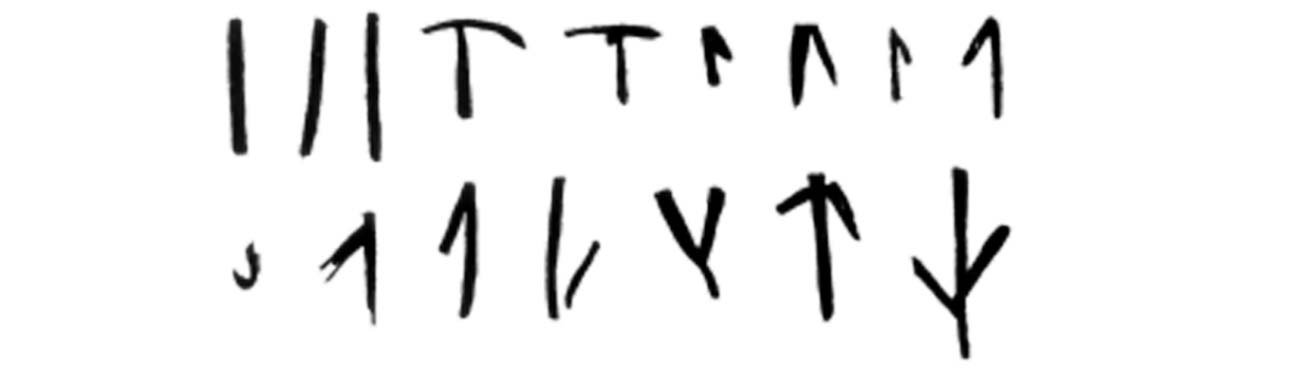
In the 20th century, inscriptions were discovered on pottery at sites across China, including Banpo near Xi’an and Jiahu in Henan. Because many signs repeat consistently across multiple objects and locations, archaeologists believe they served a language-like function — though their precise meanings remain debated. Many scholars consider these the precursors to the Chinese writing system.
1600 BC – 1046 BC: Oracle Bone Script (甲骨文 Jiǎgǔwén)
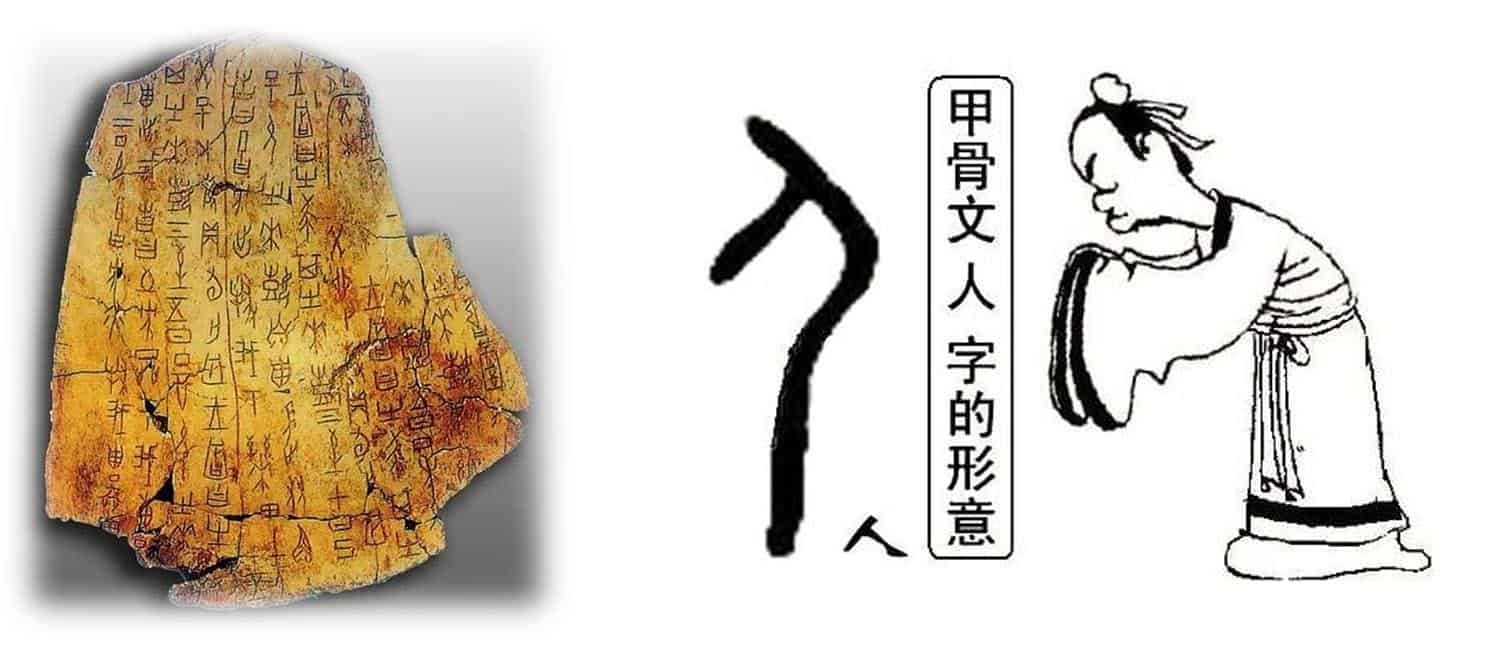
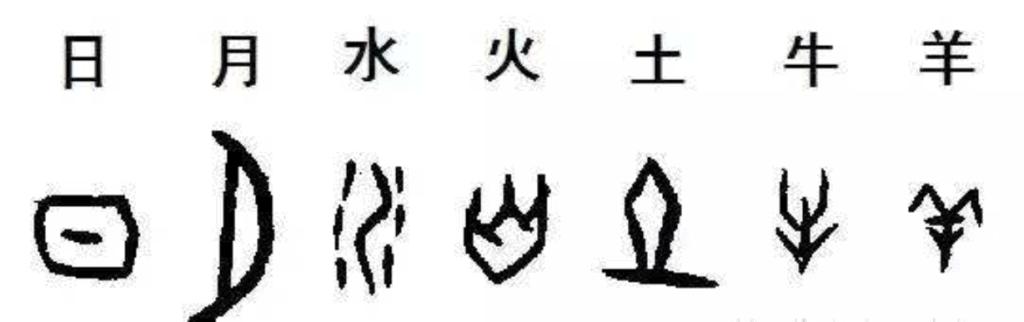
The earliest confirmed Chinese writing comes from the Shang dynasty, where characters were carved into tortoise shells and animal bones — used in divination rituals. This is why we can still read them thousands of years later: carved bone preserves far better than silk or wood. These oracle bone characters are pictographic and already remarkably mature in their structure. Most strikingly, many are still recognizable today: 日 (sun), 月 (moon), 水 (water), 火 (fire), 牛 (ox), 羊 (sheep).
Notice how the oracle bone characters below map directly to characters still used today: 日月水火土牛羊
~1000 BC – 256 BC: Bronze Inscriptions (金文 Jīnwén)
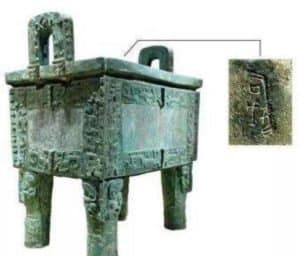
As Chinese civilization developed, characters moved from bones to bronze — cast into ceremonial vessels, bells, and cauldrons. Bronze inscription characters are rounder and more fluid than oracle bone script, and for the first time began incorporating more abstract concepts beyond the purely pictographic. These vessels were status objects, so the characters were deliberately crafted with artistry.
221 BC: Small Seal Script (小篆 Xiǎozhuàn)
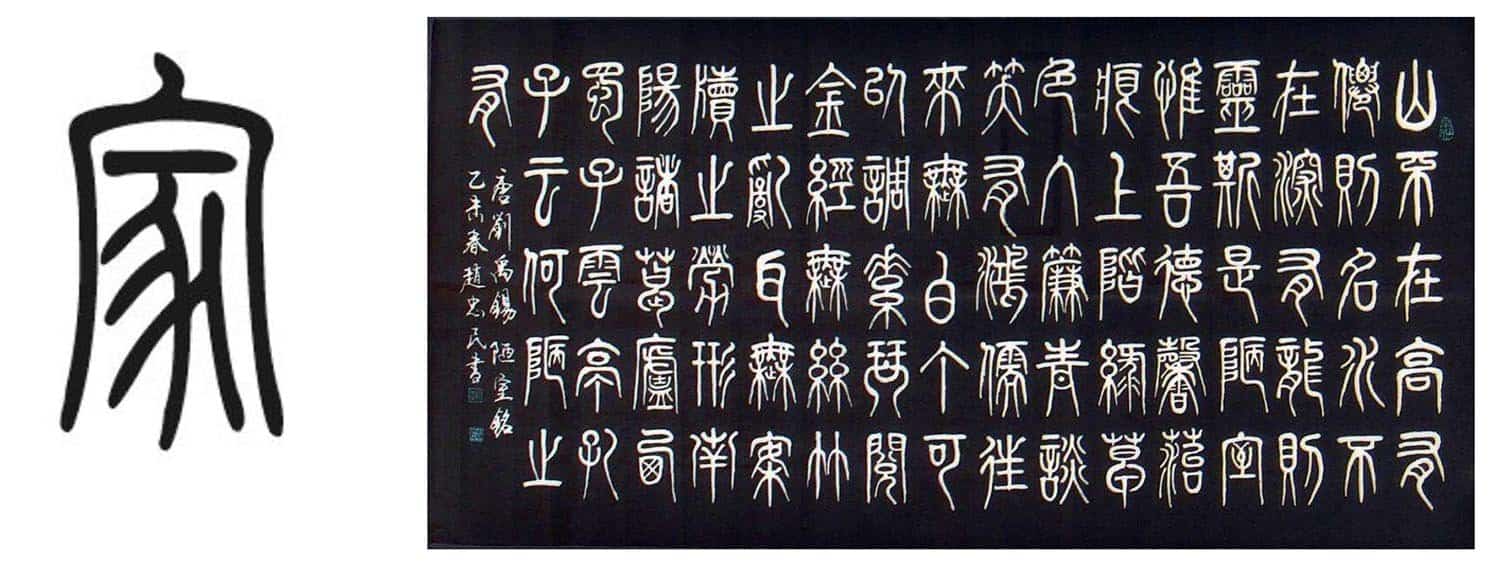
The single most important moment in Chinese character history: when Qin Shi Huang unified China in 221 BC, he mandated a single standardized script across all territories. This was small seal script — more abstract, more systematized, and critically, now capable of representing not just concrete objects but abstract ideas. Characters were becoming true symbols rather than pictures. You can still recognize many characters from this period, such as 家 (home/family).
Evolution of Chinese Characters: The Major Script Styles
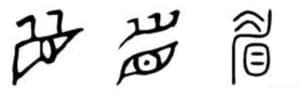
Here are the characters for 眉 (méi, eyebrow) written in oracle bone script (left), bronze inscriptions (center), and small seal script (right) — showing how form gradually abstracted over time.
Clerical Script (隶书 Lìshū) — Qin to Han Dynasty
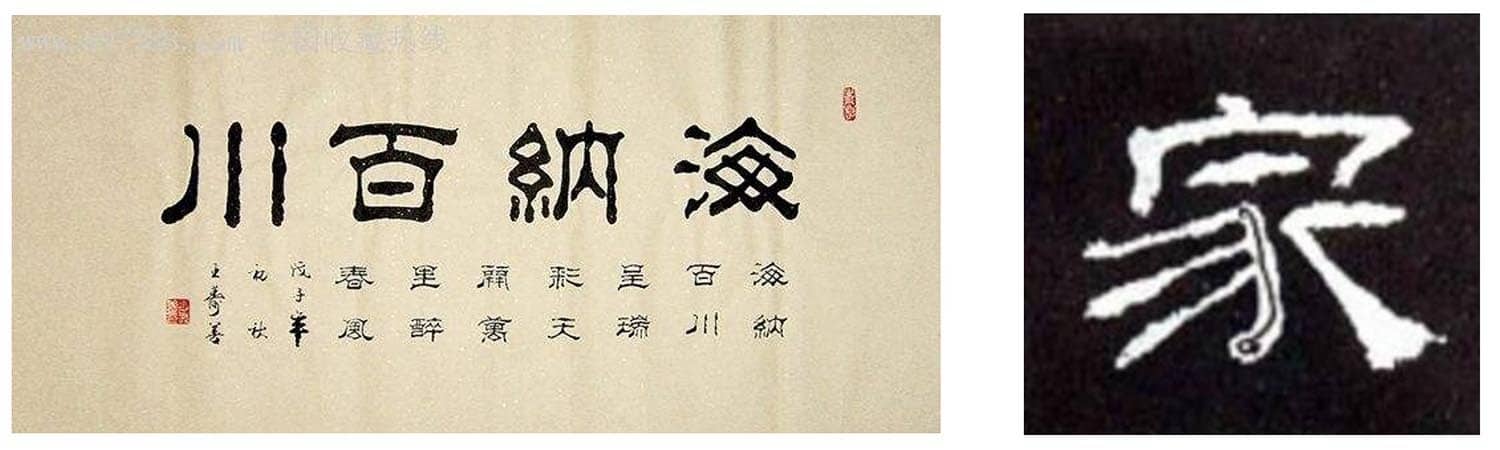
Emerging from small seal script during the Qin dynasty and flourishing through the Han, clerical script is characterized by its flat, wide strokes and distinctive “silkworm head, wild goose tail” stroke endings. It’s far more readable than seal script and remains visually striking today — you’ll still see it on shop signs, book covers, and traditional-style advertising throughout China. Below, the character 家 in clerical script:
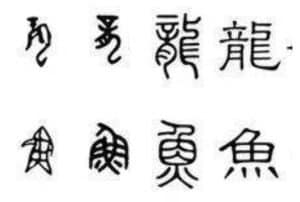
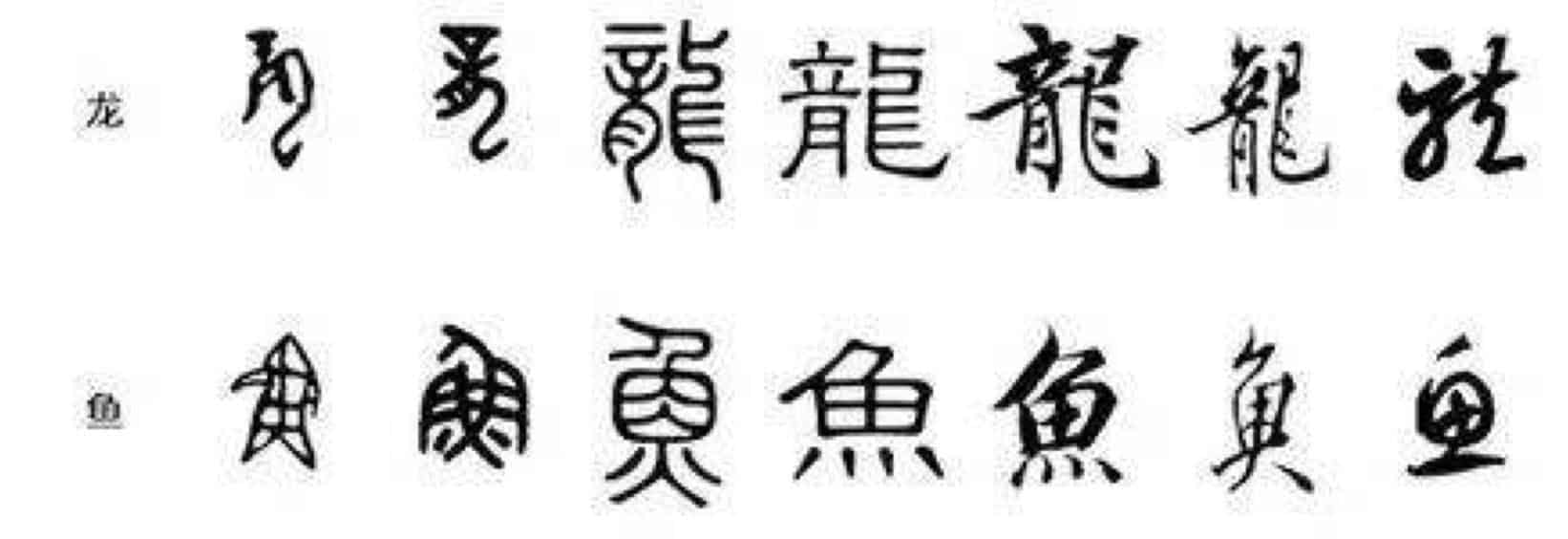
Let’s compare how 龙 (dragon) and 鱼 (fish) evolved across four scripts: oracle bones (far left), bronze inscriptions, small seal script, clerical script (far right):
Cursive Script (草书 Cǎoshū)
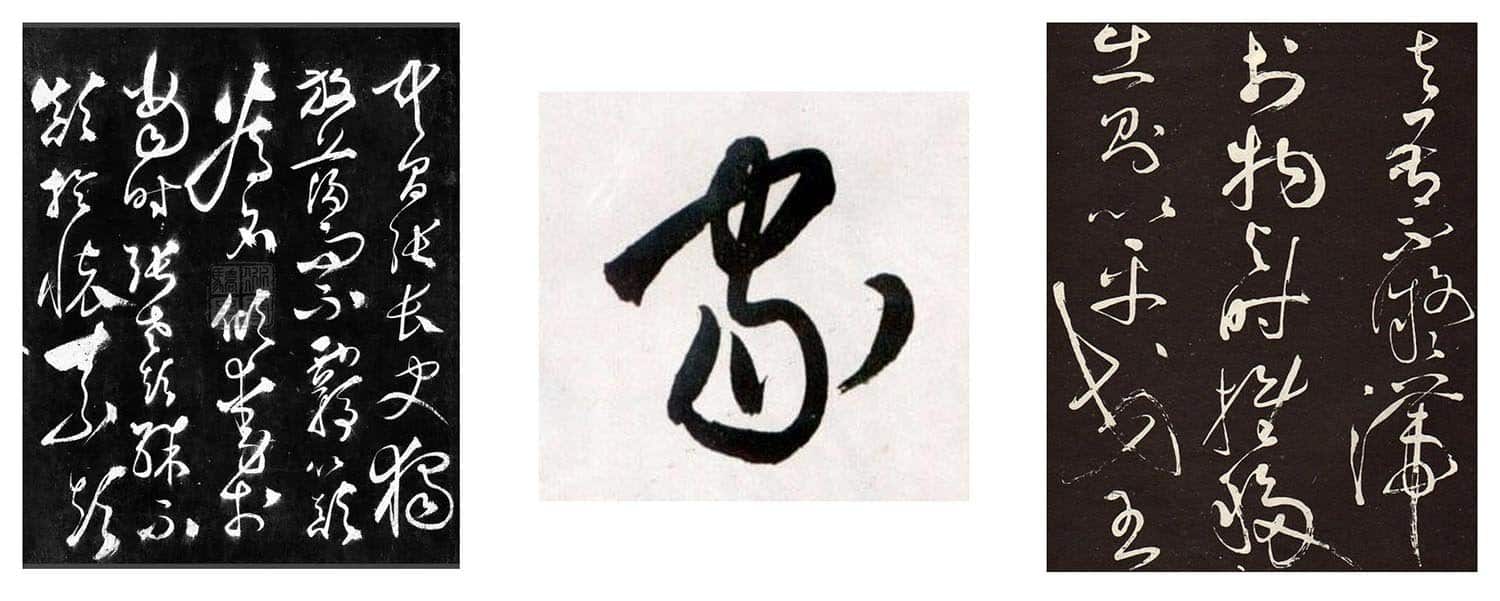
Cursive script is the wild child of Chinese calligraphy — strokes are merged, abbreviated, and sometimes barely recognizable as their source characters. It developed as a faster alternative for educated writers, and while it’s technically a legitimate script with its own rules, even many native Chinese readers struggle to decode it. Do you recognize the character repeated throughout this article in the example below? It’s 家.
Regular Script (楷书 Kǎishū) — The Standard Today
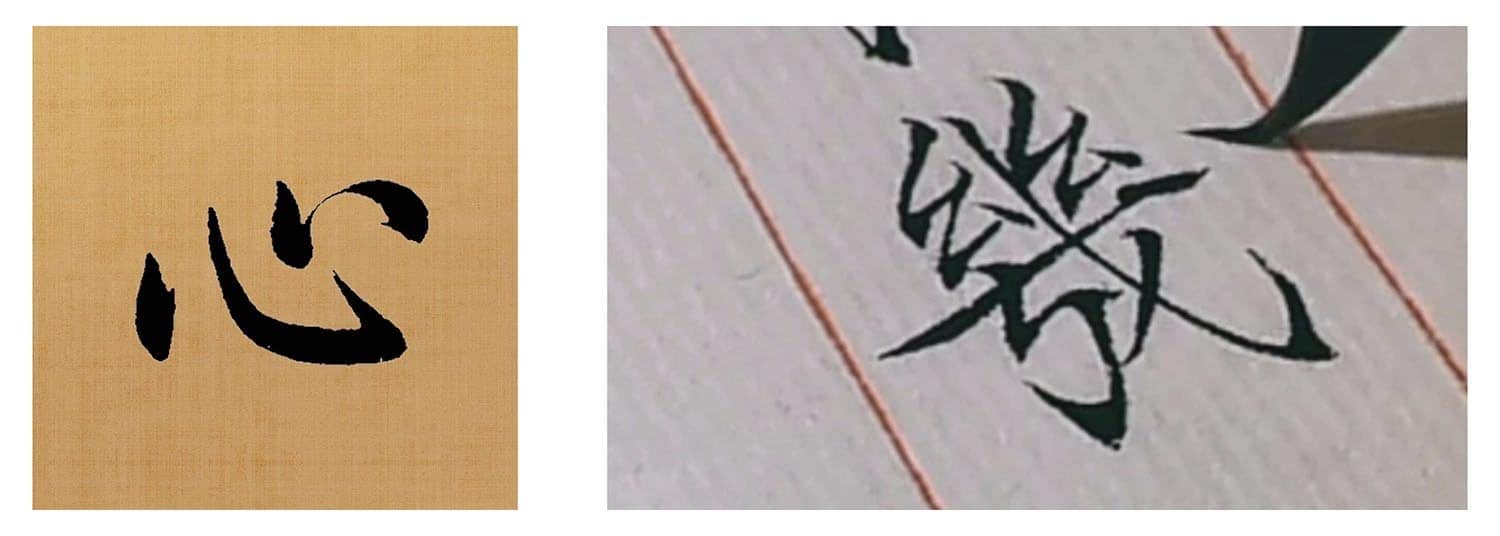
Regular script is what you’ll learn in class and see in textbooks — clear, structured, and consistent. Each stroke is distinct and the characters sit neatly in their imaginary square boxes. This is the script used for printed Chinese today. Calligraphers often prefer traditional characters in this style because the additional strokes give more opportunity for artistic expression.
Semi-Cursive Script (行书 Xíngshū) — Most Practical for Daily Writing
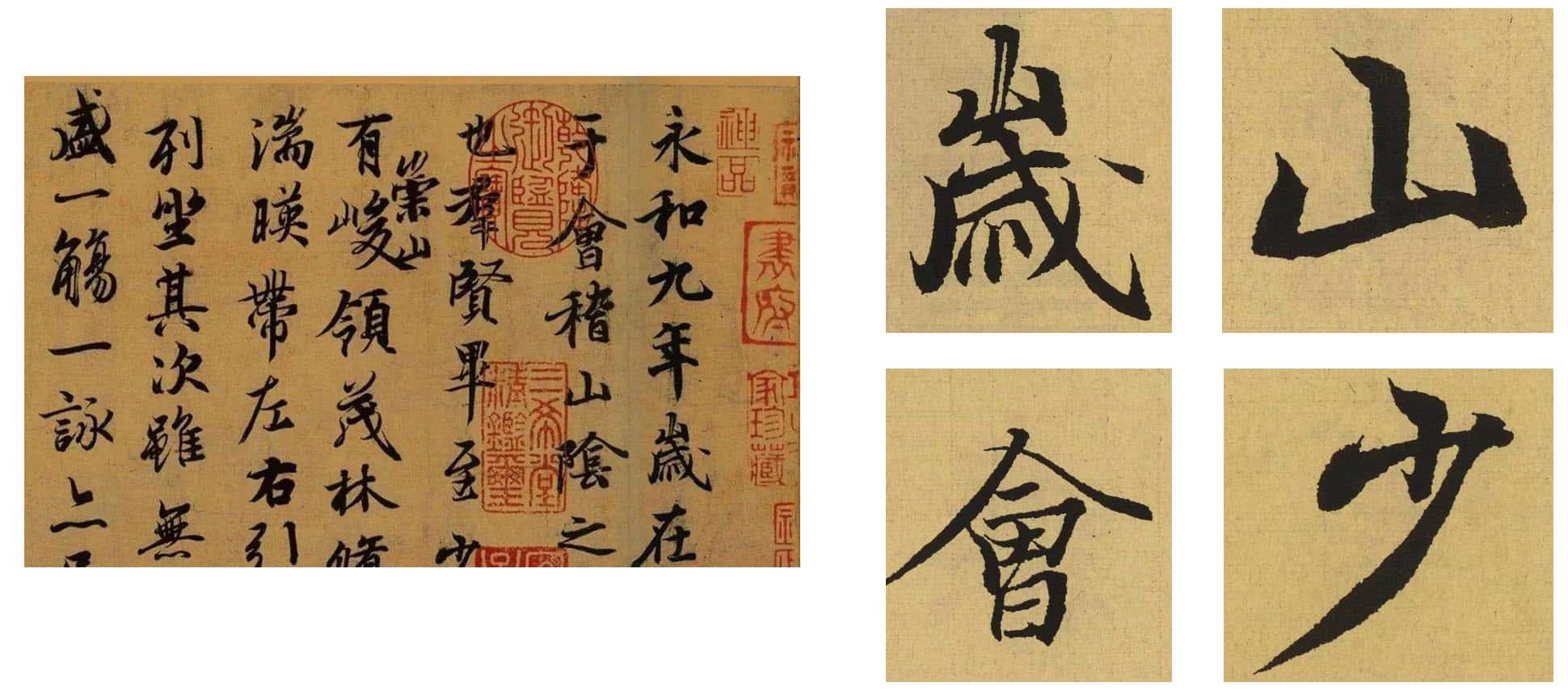
Semi-cursive blends the clarity of regular script with the flow of cursive — strokes connect naturally but characters remain readable. This is the script most educated Chinese people use when writing by hand in daily life. The most famous piece of Chinese calligraphy, Lantingji Xu (兰亭集序) by Wang Xizhi, is written in semi-cursive and contains 323 characters. It’s considered the pinnacle of Chinese calligraphic art.
Final comparison — 龙 (dragon) and 鱼 (fish) across all seven stages, from oracle bones through to cursive:
How to Write Chinese Characters: Strokes, Radicals & Stroke Order
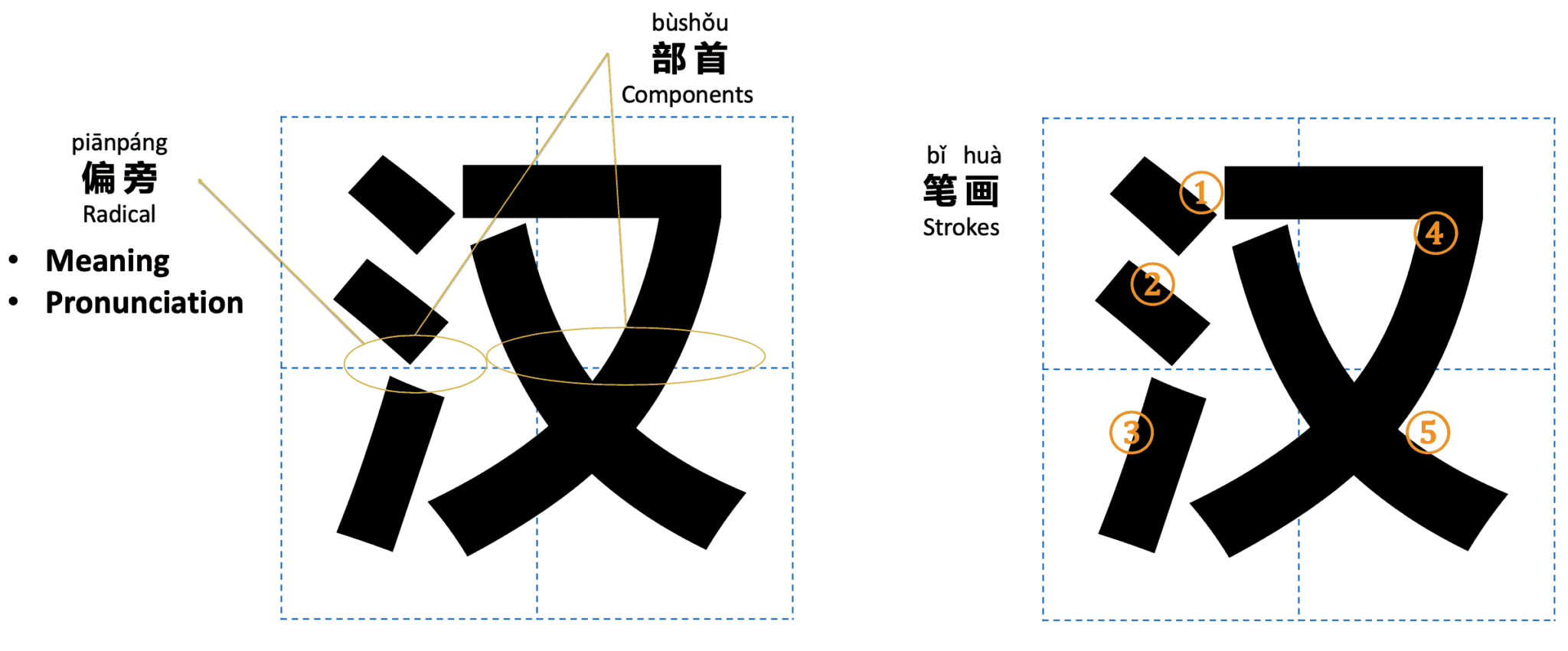
Unlike Pinyin, Chinese characters are written within an imaginary square box structure. Whether a character has 2 strokes or 20, all elements fit proportionally inside the same box. There are two key structural concepts every learner needs to understand:
- Radicals (部首 bùshǒu): A fixed set of ~214 components that signal a character’s meaning category. The water radical (氵) appears in 河 (river), 海 (ocean), 洗 (wash), and hundreds more. Learning radicals dramatically accelerates character recognition.
- Components: The other building blocks that make individual characters distinctive — often providing phonetic clues (see phono-semantic characters above).
Chinese Character Stroke Order Rules
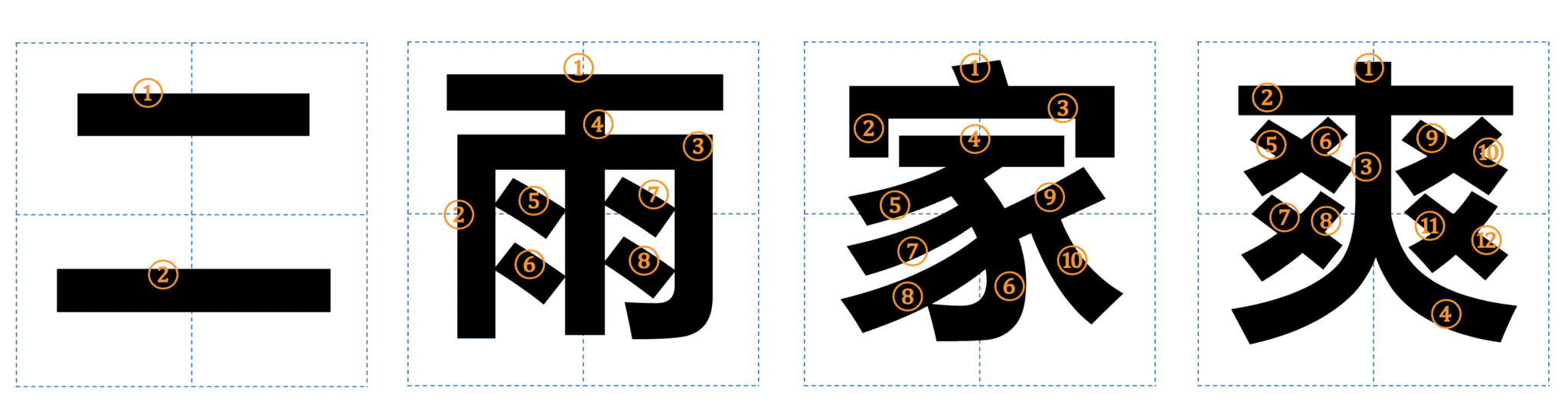
Stroke order isn’t arbitrary — it’s a system that makes writing faster and more consistent, and following correct stroke order helps with muscle memory. The core rules:
- Top before bottom
- Left before right
- Horizontal strokes before intersecting vertical strokes
- Left-falling strokes (撇 piě) before right-falling strokes (捺 nà)
- Outside frame before inside content, then close the bottom
- Center stroke before outer strokes in symmetric characters
Here are the stroke orders for 二 (two), 雨 (rain), 家 (home), and 爽 (feel good). The character for two has just 2 strokes; 爽 has 12:
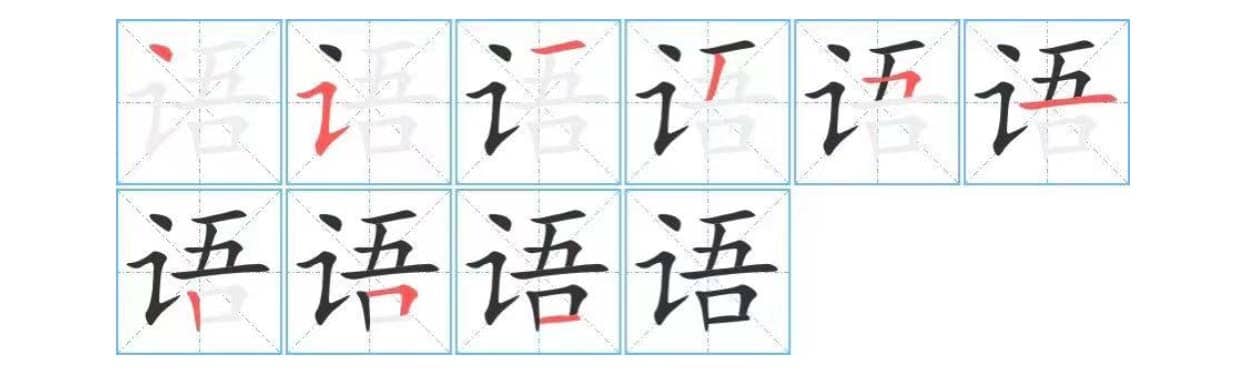
For example, the character 语 (yǔ, language) written stroke by stroke:
Chinese Character Radicals: The Key to Faster Learning
There are 214 traditional radicals. Once you know them, you can decode the meaning category of most new characters at a glance. Here are two commonly confused radical pairs:
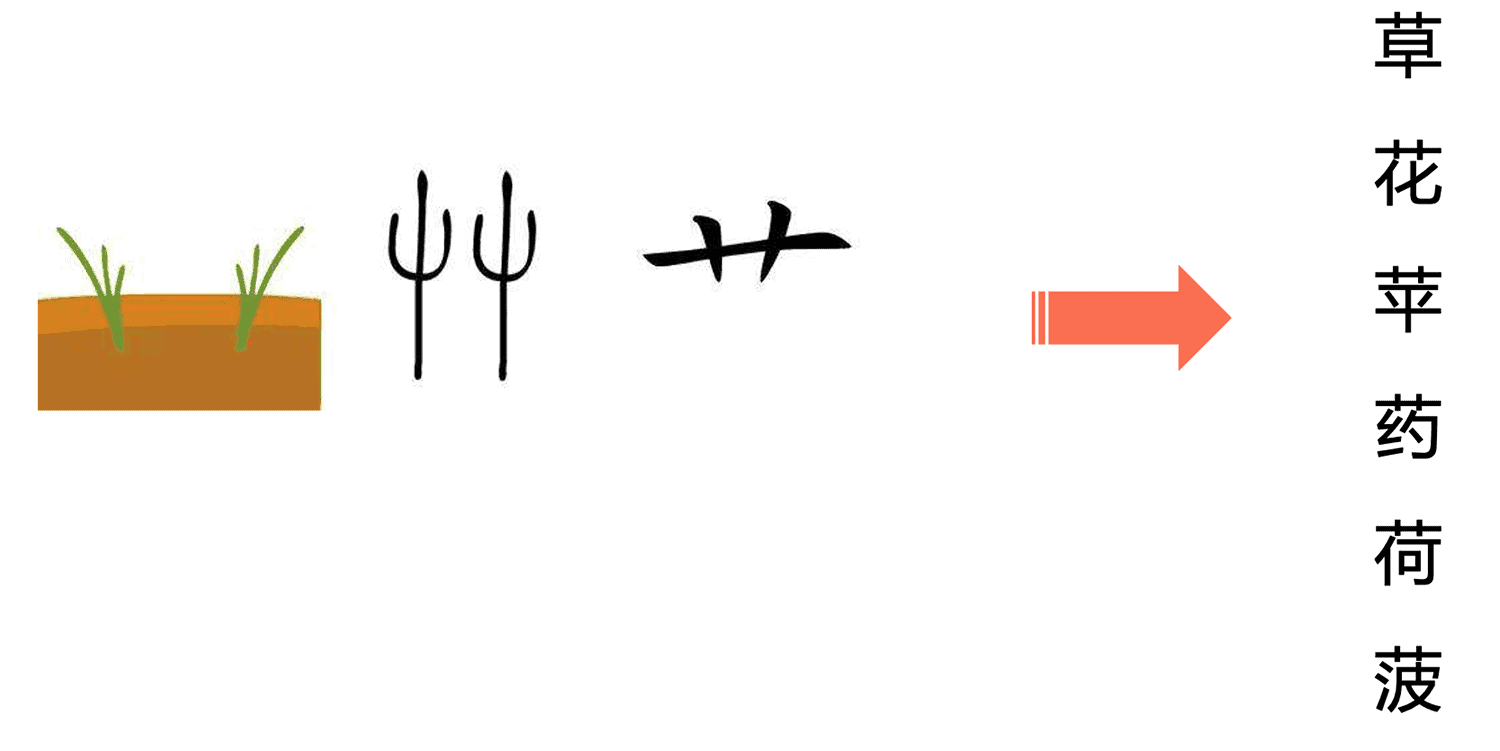
The grass radical 草 (⺾) appears in characters related to plants: 草 (grass), 花 (flower), 苹 (apple), 药 (medicine), 莲 (lotus), 菠 (spinach).
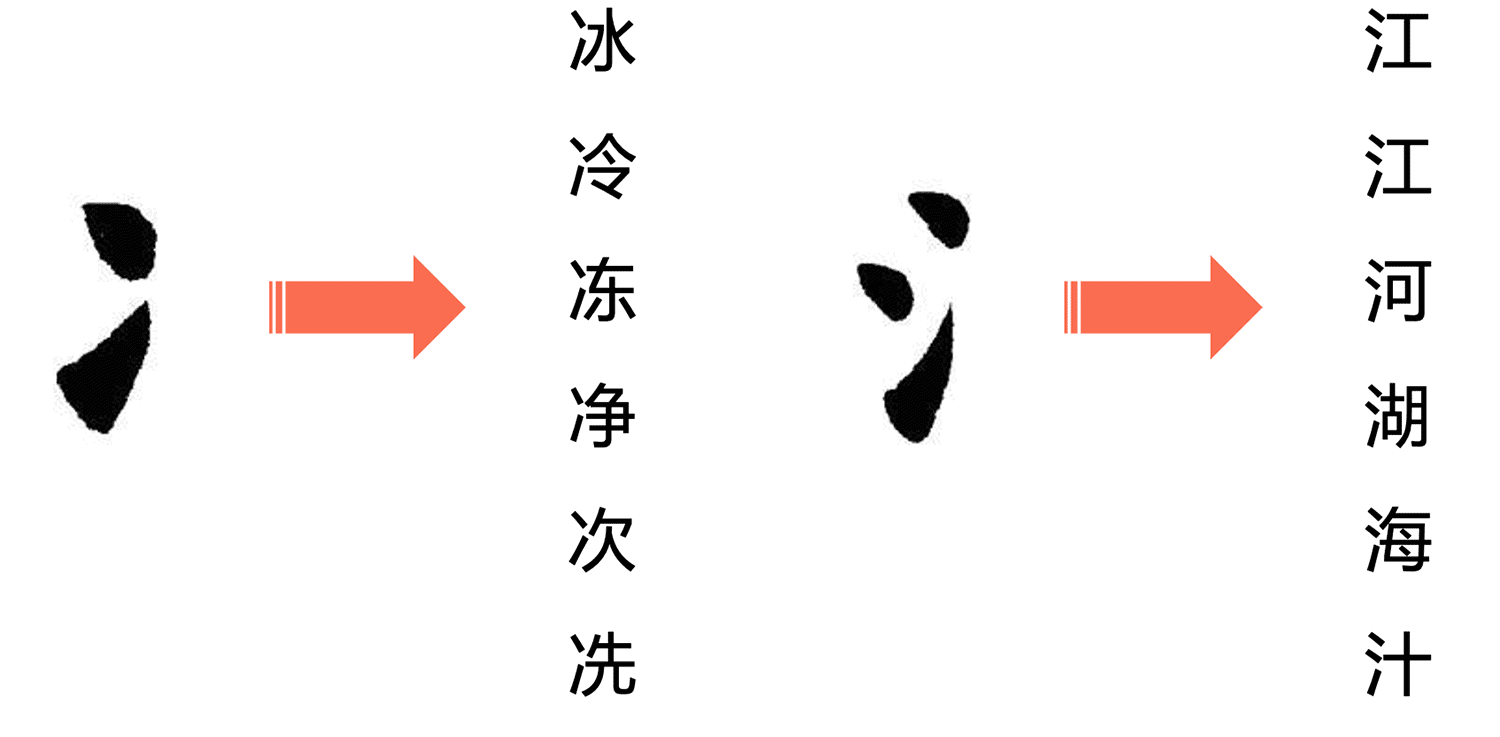
The water radical 水 (氵) and ice radical 冰 (冫) look almost identical — two versus three dots on the left side. Water radical characters: 河 (river), 湖 (lake), 海 (ocean), 汁 (juice), 洗 (wash). Ice radical characters: 冰 (ice), 冷 (cold), 冻 (freeze), 净 (clean).
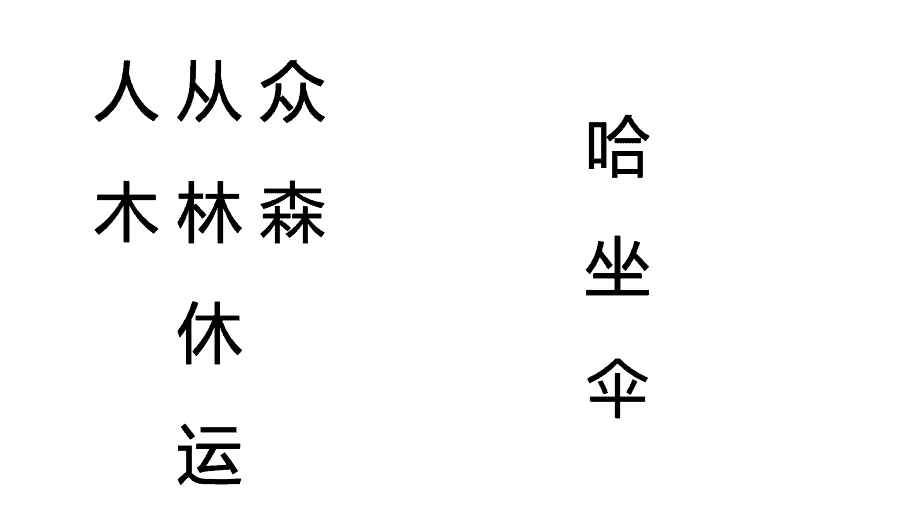
And here are characters whose visual structure still directly reflects their meaning — living pictograms and compound ideograms in use today: 从 (from, two people) 众 (crowd, three people), 木 (wood) 林 (grove, two trees) 森 (forest, three trees), 休 (rest, person by tree), 坐 (sit), 伞 (umbrella).
Want to learn Chinese characters with a structured, teacher-led approach?
GoEast’s dedicated Hanzi Characters Course takes you from basics to reading fluency with native teachers. Book a free trial lesson →
Simplified vs. Traditional Chinese Characters
This is one of the most common questions from new Mandarin learners: which should I learn? Here’s a quick comparison, with a full deep-dive in our dedicated article: Simplified vs. Traditional Chinese Characters.
| Feature | Simplified (简体字) | Traditional (繁體字) |
|---|---|---|
| Used in | Mainland China, Singapore, Malaysia | Taiwan, Hong Kong, Macau, overseas communities |
| Introduced | 1950s–1960s by PRC government | In continuous use for 2,000+ years |
| Stroke count | Fewer strokes — easier to write | More strokes — harder to write, more distinctive |
| Example | 爱 (love) — 10 strokes | 愛 (love) — 13 strokes |
| Example | 龙 (dragon) — 5 strokes | 龍 (dragon) — 16 strokes |
| Best for learners who… | Plan to live/work in mainland China; studying HSK | Focused on Taiwan, Hong Kong, classical literature, calligraphy |
| Cross-readability | Educated simplified readers can often read traditional | Traditional readers generally can read simplified |
How to Memorize Chinese Characters: Proven Tips
The best memorization strategy works with the character’s structure, not against it. Since most characters have a logical origin, connecting the visual form to a story or a meaning-component breakdown makes them stick far better than rote repetition.
Some Practical Tips for Writing Chinese Characters
- Use a fine-point pen (e.g. Uni-ball Eye) — thin lines make it easier to distinguish strokes cleanly
- Use Pleco‘s built-in stroke order animations, or a dedicated stroke order app
- Write on graph paper or in character practice grids (方格纸) to keep proportions consistent
- Flashcard apps like Anki with spaced repetition dramatically cut review time
- Learn characters in thematic groups linked by radical — all water-radical characters together, all fire-radical characters together
- Join GoEast’s dedicated Hanzi course for structured teacher-led progression
“取” and “娶” — The Story Behind the Character
Take the character 取 (qǔ): the left component is 耳 (ear) and the right is 又 (originally meaning “right hand,” not “again”). The historical story: ancient soldiers were required to bring back one ear per enemy killed as proof of their battlefield count. So 取 literally depicts “taking an ear with a hand” — meaning “to take” or “to fetch.” This story is unforgettable, which means the character is too.
And once you know 取, you get 娶 (qǔ) for free: 取 + 女 (woman) = “to take a woman” → to marry. Same pronunciation, related meaning, logical structure.
“难” and “谁” — Telling Similar Characters Apart
Both 难 (nán, difficult) and 谁 (shéi, who) share the component 隹 (zhuī), a short-tailed bird. Now that you know 又 means “right hand”: 难 = hand + bird → imagine catching a bird bare-handed. Difficult, right? For 谁, the radical is 讠(speech/language). If someone knocks at the door, you use your voice to ask “who’s there?” Two characters, one shared component, two memorable stories.

“左” and “右” — Left and Right, Never Confused Again
Mixing up 左 (zuǒ, left) and 右 (yòu, right) is a rite of passage. Here’s the fix: in traditional China, most people eat with their right hand, so 右 includes the component 口 (kǒu, mouth) — the hand you use to bring food to your mouth. The left hand was mainly for work, so 左 includes 工 (gōng, work, from 工作). Right → mouth. Left → work. Done.

Want more of these? See our collection of Chinese characters that look just like their meaning →
GoEast’s Video Guide to Chinese Characters
GoEast teacher Lynn walks through the complete story of Chinese Hanzi — from oracle bones to modern calligraphy styles, with explanations of radicals, components, and stroke rules. A great companion to this article:

Chinese Characters: Frequently Asked Questions
What are basic Chinese characters?
Basic Chinese characters are the foundational components called radicals (部首 bùshǒu) — 214 building blocks from which all other characters are constructed. Common examples include: 一 (yī, one), 二 (èr, two), 三 (sān, three), 上 (shàng, up/on), 下 (xià, down/under), 中 (zhōng, middle/center), 人 (rén, person), 口 (kǒu, mouth), and 日 (rì, sun/day). Learning these first gives you a structural map for decoding thousands of more complex characters.
What is the most common Chinese character?
According to Chinese character frequency lists, 的 (de) is the most frequently used character in modern Chinese text by a significant margin. It functions as a grammatical particle that forms possessive constructions (similar to “of” or “‘s” in English) and is used to modify nouns. In second and third place are 一 (yī, one) and 是 (shì, to be).
What is the most complex Chinese character?
The character 𧚒, with an extraordinary 172 strokes, is generally cited as the most complex character in the Chinese writing system. Its meaning and origin remain debated among scholars — some believe it may be an invented or nonsense character rather than a character with genuine historical use. For practical purposes, the most complex character you’re likely to encounter in real Chinese text is 齉 (nàng, stuffy-nosed) with 36 strokes.
Does Chinese or Japanese have more characters?
Chinese has significantly more characters. The Zhonghua Zihai Chinese dictionary lists approximately 85,000 characters, while the Dai Kan-Wa Jiten, the most comprehensive Japanese character dictionary, contains around 50,000 entries. However, in everyday use both languages rely on a much smaller working set: roughly 2,000–3,500 characters for functional literacy in either language.
What are the 8 basic Chinese strokes?
Every Chinese character is built from combinations of eight core brush strokes (永字八法, the Eight Principles of the character 永):
- 点 diǎn — dot (·)
- 横 héng — horizontal stroke (—)
- 竖 shù — vertical stroke (|)
- 钩 gōu — hook (various curved endings)
- 提 tí — rising tick (↗)
- 撇 piě — left-falling sweep (\)
- 捺 nà — right-falling sweep (/)
- 折 zhé — turning stroke (⌐)
How many Chinese characters do I need to know to be fluent?
Functional literacy in Chinese requires knowing approximately 2,000–3,500 characters. With 2,000 characters you can handle most everyday reading tasks; with 3,500 you can read approximately 99% of modern Chinese text including newspapers and social media. Educated native Chinese speakers typically know 6,000–8,000 characters. The good news: the most common 1,000 characters cover 80% of everyday written Chinese, so early progress feels fast. See the HSK character table above for a level-by-level breakdown.
Learn More About Chinese Characters
- Should you write Chinese characters by hand in 2025?
- Chinese character stroke order: complete guide
- Simplified vs. Traditional Chinese characters: which should you learn?
- The guide to learning 2,500+ Chinese characters effectively
- The ultimate guide to typing in Chinese characters
- Chinese characters that look just like their meaning
Ready to start learning Chinese characters with real teachers?
Join 20,000+ students who have learned Mandarin with GoEast since 2012. Try your first lesson free — no commitment needed.