
Free Chinese lessons from GoEast Mandarin
Mandarin Chinese is more approachable than many beginners expect — and you do not need to pay for quality material on day one. GoEast Mandarin has published years of free Chinese lessons covering pronunciation, pinyin, characters, greetings, reading, listening, and vocabulary. This guide maps every free resource on our site, compares formats so you can mix video, PDF, app, and community study, and shows how to build a zero-cost learning path that still leads somewhere real.
The best free Chinese lessons combine structured input with active practice: start with GoEast’s pronunciation guide and beginner video series, add graded reading PDFs and listening stories, and join the Chinese language Discord for conversation. Free apps and YouTube channels fill gaps, but a weekly rhythm — even 20 minutes daily — matters more than collecting links.
Why free Chinese lessons still need a plan
Free Chinese lessons work when you follow a sequence, not when you bookmark everything at once. Mandarin has four tones, a logographic writing system (汉字 Hànzì), and grammar that differs sharply from English. Random YouTube clips help motivation but rarely build the foundation you need for tones, pinyin, and basic sentence patterns.
GoEast’s free materials were designed as a curriculum spine: pronunciation first, then survival phrases, then characters and graded reading. Each resource below links to a dedicated article or video on our site. Use them in order if you are starting from zero, or jump to the section that matches your current gap — listening, vocabulary, or character recognition.
Want tips in your inbox? GoEast offers a newsletter signup on the main site — register there for periodic Chinese tips (you can unsubscribe anytime). This page focuses on self-serve lessons; no form is embedded here.
GoEast’s free Chinese lesson library
These nine topic areas are the core of our free Chinese lessons hub. Each includes article text, and most pair with video or downloadable material.
Pronunciation · 发音 fāyīn
Video + article
GoEast instructor Lynn walks through tones, initials, finals, and accents in a 26-minute class. Read the full write-up on pronunciation of Mandarin, then watch the lesson on YouTube. Nail tone distinction before moving to vocabulary — misheard tones cause real-world confusion (买 mǎi “buy” vs. 卖 mài “sell”).
Beginner Chinese · 初级中文 chūjí Zhōngwén
Video series
One of our most popular YouTube series covers basic phrases (“I’m fine”), pinyin basics, and initials and finals. Find the full beginner Chinese lessons on our website or browse the playlist on our YouTube channel roundup.
Pinyin · 拼音 pīnyīn
Reference
The Romanization system helps learners and native speakers alike type, look up words, and read aloud before characters stick. Our guide to the Chinese pinyin alphabet explains initials, finals, and how pinyin sits alongside Hanzi in real texts.
Characters · 汉字 Hànzì
Video + article
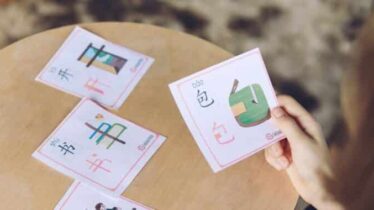
Over 50,000 characters exist, but a few thousand cover daily life. Lynn explains radicals, components, and stroke logic in video form; the companion article all about Chinese characters goes deeper on how characters make sense as a system.
Greetings · 问候 wènhòu
Phrase list
From “good morning” to “long time no see,” our guide to greetings in Chinese gives pinyin, Hanzi, and English for high-frequency opening lines you will use in shops, offices, and with friends.
Reading stories · 阅读 yuèdú
PDF + video
Illustrated stories narrated by GoEast staff, each with a downloadable PDF containing Hanzi, pinyin, and English vocabulary. Start with our Chinese short stories with pinyin PDF — ideal for learners who can read pinyin but want character exposure.
Listening practice · 听力 tīnglì
Graded audio
Stories developed with Du Chinese and GoEast, leveled for different stages. Read along with Hanzi, pinyin, and English while you listen. Browse all free Chinese listening practice stories — topics include everyday life and modern themes like remote work.
Vocabulary · 词汇 cíhuì
Topic cards
HSK textbooks cover core words, but real Chinese includes hobby and pop-culture vocabulary too. Explore topic-based cards — from meditation to Star Wars — in our Chinese vocabulary topics hub.
Language history · 中文 Zhōngwén
Background
Context makes characters and idioms memorable. Read everything about the Chinese language — how Mandarin relates to other varieties, why Simplified and Traditional scripts exist, and how the language evolved.
Video, PDF, app, or community: which free format fits?
Not every free Chinese lesson delivers the same skill. Match the format to what you are trying to improve.
| Format | Best for | GoEast free example | Limitation |
|---|---|---|---|
| Video lessons | Tones, mouth shape, listening input, motivation | Pronunciation class, beginner series | No one hears you speak; easy to watch passively |
| PDF / reading | Character recognition, graded reading, vocabulary in context | Short stories with pinyin PDF | Weak for speaking and real-time listening speed |
| Apps & websites | Daily drills, flashcards, typing practice, HSK word lists | See our roundup of best websites and apps to learn Chinese online | Fragmented content; limited pronunciation correction |
| Community | Accountability, Q&A, casual conversation, peer feedback | Chinese language Discord server | Quality varies; not a substitute for structured grammar instruction |
Practical mix: watch one pronunciation video per week, read one graded story PDF, drill vocabulary in an app for 10 minutes daily, and post one question or voice note in Discord on weekends. That four-format loop costs nothing and covers input, output, and review.
New to Mandarin entirely? Read our introduction to Mandarin Chinese for beginners first — it frames tones, pinyin, and characters before you dive into individual free lessons.
Build a free study plan in four steps
Free Chinese lessons multiply quickly. These four steps turn scattered resources into a path you can follow for 30–90 days without paying for a course.
- Week 1–2: Sound system. Complete the pronunciation article and Lynn’s 26-minute video. Drill tone pairs until 你好 nǐhǎo and 你好吗 nǐ hǎo ma feel natural. Add the pinyin alphabet guide as reference.
- Week 3–4: Survival phrases. Work through the beginner Chinese playlist and the greetings guide. Say each phrase aloud — shadow the video, do not only read subtitles.
- Week 5–8: Characters and reading. Study radicals via all about Chinese characters, then read one short story PDF per week. Pair each story with a matching listening practice clip.
- Ongoing: Vocabulary and community. Pick two vocabulary topic cards per month aligned with your interests. Join the Discord server and introduce yourself in pinyin before switching to characters.
Worked example. Alex, a software developer in Toronto, has 25 minutes each weekday morning and wants free Chinese lessons before considering paid classes.
Monday: 10 minutes of tone drills from the pronunciation video; 15 minutes on beginner phrase shadowing.
Wednesday: Read half a graded story PDF; replay the listening story once without looking at text.
Friday: Review 20 words from a vocabulary topic card; post one sentence in Discord.
Result after 8 weeks: Alex orders food in Mandarin on a trip, recognizes common menu characters, and knows whether to invest in live classes — without spending on materials.
Free resources rarely correct your speaking in real time. If tones plateau after two months of self-study, a single live trial class often reveals habits that videos cannot fix. That is normal — free lessons are a launchpad, not a ceiling.
Free tools beyond GoEast
GoEast’s library is designed to stand alone, but pairing it with vetted external tools accelerates progress. Our article on best websites and apps to learn Chinese online compares Pleco, HelloChinese, Duolingo, and others by skill area.
For video variety beyond our channel, the best YouTube channels for learning Mandarin roundup lists creators who cover culture, HSK prep, and slow listening. Use YouTube for breadth; use GoEast articles for depth and sequenced topics.
When you are ready to go faster, read how to learn Chinese fast — many tactics there work with free materials first, then scale with tutoring.
Key takeaways
- Free Chinese lessons from GoEast cover pronunciation, pinyin, characters, greetings, reading PDFs, listening stories, vocabulary cards, and language history — all linked from this hub.
- Match format to skill: video for tones and motivation, PDF for reading, apps for daily drills, Discord for community practice.
- Follow a sequence: sounds → survival phrases → characters and graded stories → topic vocabulary and conversation.
- Speak aloud from day one — shadow free videos and post in the Discord server; passive watching alone rarely builds speaking ability.
- Newsletter tips are available via signup on the main GoEast site; combine email reminders with the structured resources above for consistency.
Ready for live feedback on your free-study foundation?
You have the free materials — add a native teacher who hears your tones and corrects them in real time. Try GoEast’s live online Mandarin courses with a free trial class.
Frequently asked questions
Where can I find completely free Chinese lessons online?
GoEast Mandarin publishes free lessons at learn-chinese-online-lessons-free-goeast-mandarin, including pronunciation video, beginner playlists, pinyin guides, character articles, greeting phrase lists, graded reading PDFs, listening stories, and vocabulary topic cards. Supplement with our Discord server and third-party app roundup for daily practice.
Are free Chinese lessons enough to become fluent?
Free lessons build a solid foundation in tones, basic grammar, and reading, but fluency requires sustained speaking practice and correction. Many learners use free GoEast materials for months, then add live classes when they want conversational speed and accurate pronunciation feedback.
Should I start with pinyin or Chinese characters?
Start with pinyin and tones. Pinyin lets you look up words, type on any device, and read aloud before character recognition catches up. GoEast’s pronunciation guide and pinyin alphabet article are designed as the first two stops in our free library.
What is the best free resource for Mandarin pronunciation?
GoEast’s 26-minute pronunciation class by Lynn — available as an article and on YouTube — covers tones, initials, finals, and common accent patterns. Pair it with mirror practice and tone-pair drills before moving to vocabulary-heavy content.
How do free PDF Chinese stories help beginners?
Graded stories with Hanzi, pinyin, and English let you read at your level while seeing characters in context. Download PDFs from our short stories hub, listen to the narrated version, then re-read without pinyin to test character recall.
Can I learn Chinese for free using only apps?
Apps excel at vocabulary drills and habit building but weakly correct tones and spontaneous speech. Use apps alongside GoEast’s free articles and videos, and join the Chinese language Discord for human interaction — apps alone rarely produce confident speakers.
How much time should I spend on free Chinese lessons per day?
Twenty to thirty focused minutes daily beats occasional long sessions. Rotate formats: one day pronunciation video, one day reading PDF, one day vocabulary cards, one day Discord or app review. Consistency over eight weeks matters more than total hours in week one.